16 Rugs vs Carpet Comparisons for a Stylish Home
1. Area Rug vs Wall-to-Wall Carpet in the Living Room
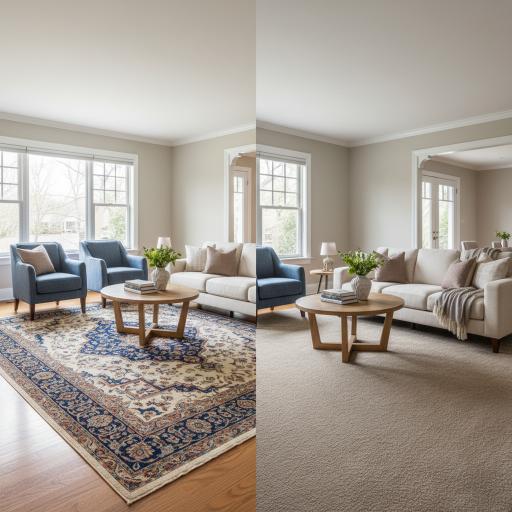
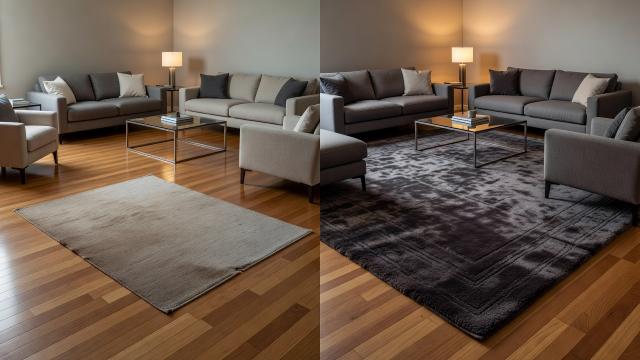
An area rug in a living room is the most design-forward and stylistically flexible flooring treatment available, and its ability to define the seating zone with precision and visual authority while leaving the surrounding floor material visible as a contrasting border creates a layered, considered quality that wall-to-wall carpet in the same room fundamentally cannot replicate. The area rug functions simultaneously as a practical floor covering, a defining architectural element that establishes the boundaries of the living zone within a larger floor plan, and a significant decorative statement through its color, pattern, and texture that contributes more to the overall character and personality of the room than almost any other single decorating element. The flexibility to change, rotate, clean independently, or replace an area rug without affecting the surrounding floor makes it a long-term investment of exceptional practical versatility.
Wall-to-wall carpet in a living room creates a completely different spatial experience, replacing the layered, defined quality of an area rug arrangement with a seamless, unified floor surface that envelops the entire room in a single consistent material and creates an atmosphere of total, immersive comfort and warmth that the interrupted floor plane of a rugged hardwood or tile surface beneath an area rug cannot fully replicate. The acoustic qualities of wall-to-wall carpet are particularly significant in living rooms used for conversation, music, or film watching, as the dense fiber coverage absorbs sound reflections that hard floor surfaces amplify, creating a quieter, more acoustically intimate environment that makes spoken conversation feel more natural and less effortful. For households with young children or elderly family members, the consistent soft landing surface of wall-to-wall carpet provides a safety and comfort benefit that area rugs cannot match throughout the entire floor plane.
2. Natural Fiber Rug vs Plush Bedroom Carpet
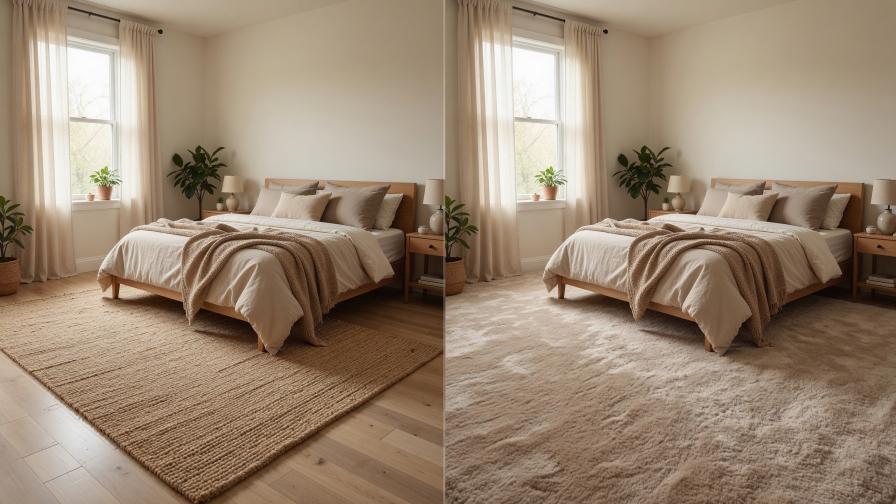
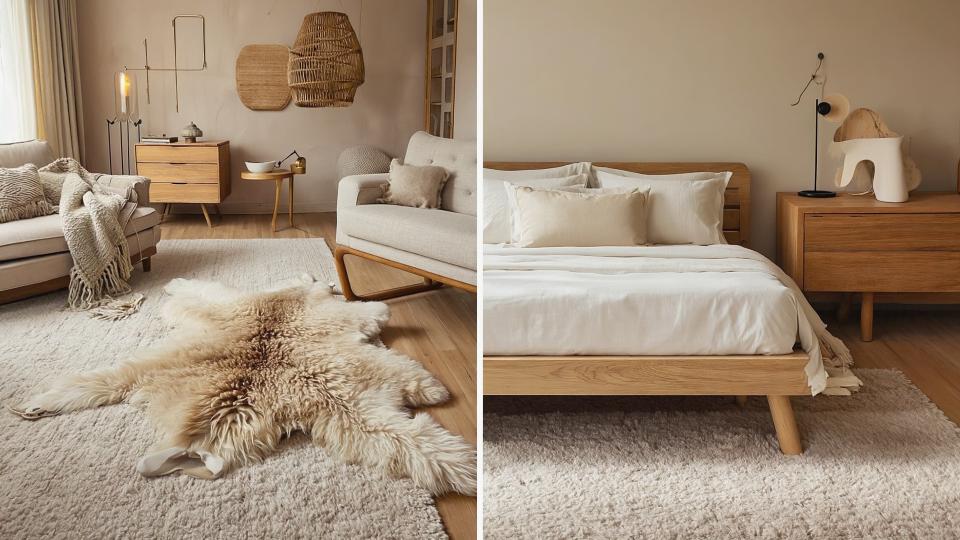
A natural fiber rug in a bedroom, whether jute, sisal, seagrass, or coir, brings an organic warmth, artisanal texture, and botanical authenticity to the floor surface that manufactured carpet pile cannot replicate, and its combination of visual naturalness and practical durability makes it one of the most popular bedroom flooring choices among interior designers working within organic modern, Scandinavian, and bohemian aesthetic frameworks. The flat, woven surface of a natural fiber rug adds a layer of texture to the bedroom floor that contrasts beautifully with the smooth surfaces of wooden or tiled floors, creating a visual and tactile richness at ground level that enhances the overall sensory quality of the bedroom environment. Natural fiber rugs also have the significant practical advantage of being removable for cleaning, rotating to equalize wear, and replacing without the disruption and expense of removing and replacing a fitted floor covering.
Plush wall-to-wall bedroom carpet is the most sensorially indulgent and physically comforting of all bedroom floor treatments, and the experience of stepping barefoot from bed onto thick, warm carpet pile is one of those simple domestic pleasures that carpet advocates cite most consistently and most convincingly as the defining argument for choosing fitted carpet over any alternative. The dense, deep pile of a quality bedroom carpet absorbs the shock of footfall in a way that no hard floor with a rug on top can entirely replicate, and the warmth it retains, both the physical thermal warmth of a dense fiber layer between feet and cold subfloor and the visual warmth of a consistent, enveloping neutral tone across the entire floor plane, creates a bedroom atmosphere of total physical comfort and visual calm that is genuinely difficult to achieve with alternative floor treatments.
3. Vintage Persian Rug vs Contemporary Patterned Carpet
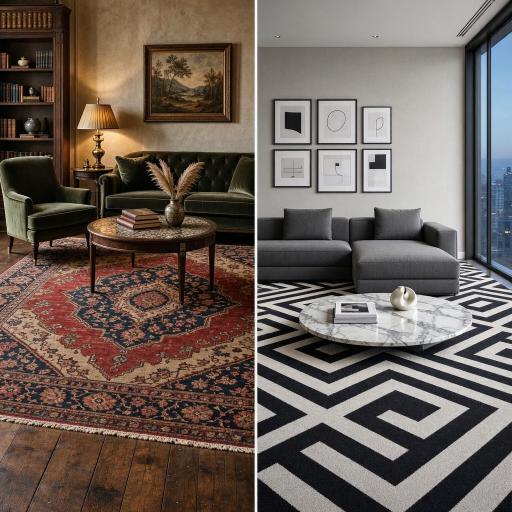
A vintage Persian rug is the most culturally rich and historically resonant floor covering available in any interior design context, and its combination of centuries-old weaving traditions, natural dyes that develop extraordinary depth and complexity with age, and the genuinely unique character of every individual piece that has been worn, faded, and softened by generations of human use creates a floor element of irreplaceable authenticity and personal significance that no contemporary reproduction or machine-made equivalent can approach with the same depth of material character. The vintage Persian rug tells a specific story of human skill, cultural tradition, and the passage of time that is embedded in every fiber of its construction, and this layer of historical resonance gives a room containing one a quality of connection to a larger human story that purely contemporary decorating elements, however beautiful, cannot provide.
Contemporary patterned wall-to-wall carpet represents the most ambitious and design-forward application of the fitted carpet concept, using the entire floor plane of a room as a continuous canvas for geometric, botanical, or abstract pattern in a way that creates an immersive, total design environment of remarkable visual power. The difference between a room with patterned wall-to-wall carpet and the same room with plain carpet is not simply one of decoration but of spatial character, as the pattern creates a dynamic, energized floor plane that becomes an active contributor to the room’s design narrative rather than a passive, receding backdrop, and the fact that the pattern covers every centimeter of floor to every wall creates an encompassing quality that the bounded area of a patterned rug within a larger plain floor cannot achieve with the same total visual impact.
4. Sheepskin Rug vs Soft Wool Carpet
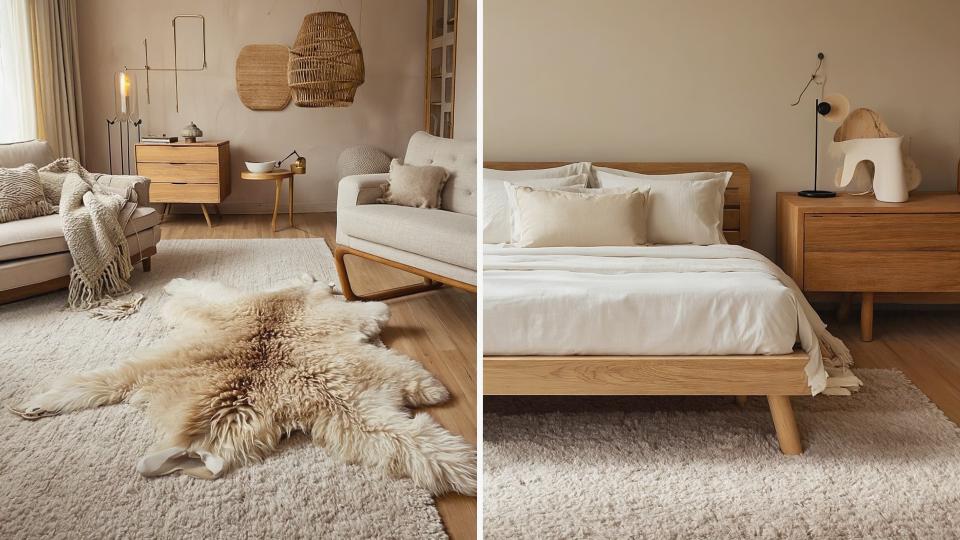
A sheepskin rug is the most tactilely indulgent and organically beautiful of all floor and furniture coverings, and its extraordinary softness, natural warmth, and the genuine animal origin that gives each piece its unique character and form make it a decorating object of rare sensory quality that is as much a piece of natural sculpture as it is a practical floor covering. The deep, lustrous pile of a natural sheepskin, with its individual fiber variation, natural warmth, and the characteristic way it catches and reflects light in a shifting, slightly iridescent way as you move around it, creates a visual and tactile experience that synthetic alternatives can approach but never fully replicate, and the natural lanolin content of sheepskin wool gives it a gentle self-cleaning and moisture-resistant quality that makes it considerably more practical in daily use than its delicate, luxurious appearance suggests.
Soft wool wall-to-wall carpet represents the most genuinely natural and environmentally considered of all fitted carpet options, combining the complete floor coverage and acoustic qualities of wall-to-wall installation with the natural fiber quality, thermal insulation, and inherent flame resistance of pure wool in a combination that positions it as the premium choice in the fitted carpet category for discerning homeowners who want the comfort and coverage of wall-to-wall carpet without the environmental and health concerns associated with synthetic fiber alternatives. Wool carpet’s natural crimp gives it exceptional resilience and durability, allowing it to recover from furniture compression and foot traffic in a way that synthetic fibers cannot match, and its natural soil resistance means that a quality wool carpet maintains its appearance through years of daily use with considerably less maintenance than its synthetic equivalents require.
5. Outdoor Rug vs Artificial Grass Carpet
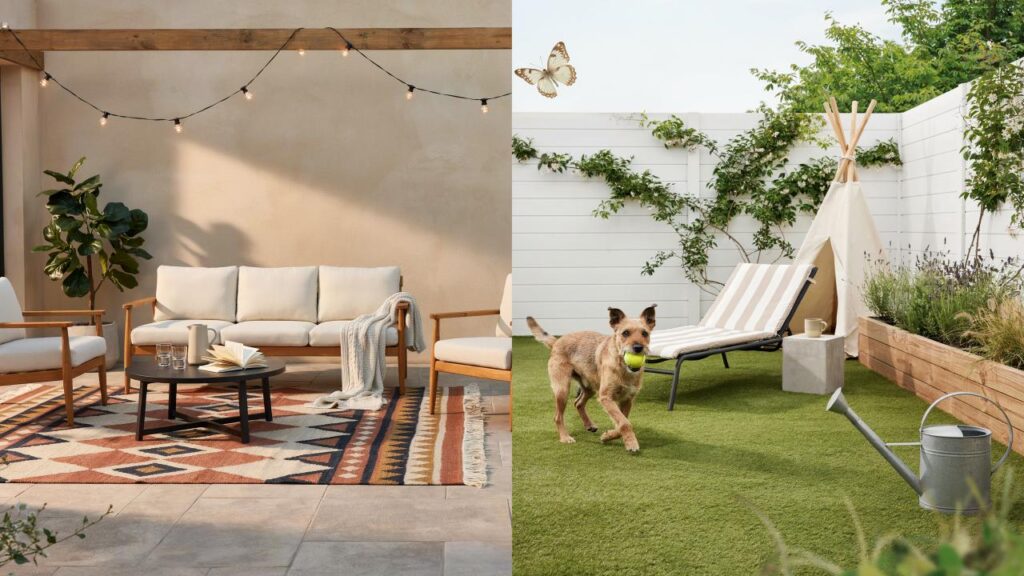
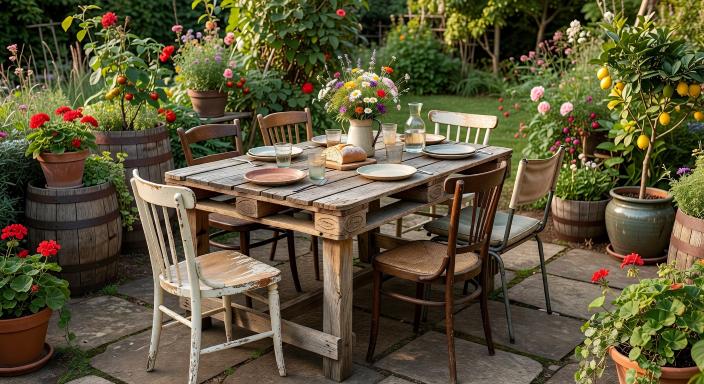
An outdoor area rug is the most immediate and versatile tool available for transforming a patio, deck, or balcony from a purely functional exterior surface into a properly furnished, designed outdoor living space that extends the aesthetic quality and comfort of the interior into the open air. The ability of a well-chosen outdoor rug to define the seating zone on a terrace with the same spatial clarity and visual authority that an interior rug provides in a living room makes it one of the most impactful single additions available to any outdoor space, and the wide range of weather-resistant materials and designs now available in the outdoor rug market means that the choice between an outdoor rug and alternative ground covering solutions is increasingly a matter of aesthetic preference rather than practical compromise.
Artificial grass carpet represents the most dramatically transformative outdoor ground covering available for balconies, roof terraces, and patios where real lawn is impossible to establish, and its ability to create a convincingly green, lush ground surface in entirely artificial growing conditions makes it the preferred choice for urban outdoor spaces where the desire for a connection to natural landscape cannot be fulfilled through conventional gardening means. The visual and psychological impact of a green ground surface in an urban outdoor space is consistently underestimated until it is experienced directly, as the human brain’s deeply evolved positive response to the color and texture of grass creates an almost immediate sense of relaxation, nature connection, and spatial ease that hard, gray outdoor surfaces, however tastefully finished, cannot produce with the same instinctive, physiological immediacy.
6. Kilim Rug vs Geometric Patterned Carpet
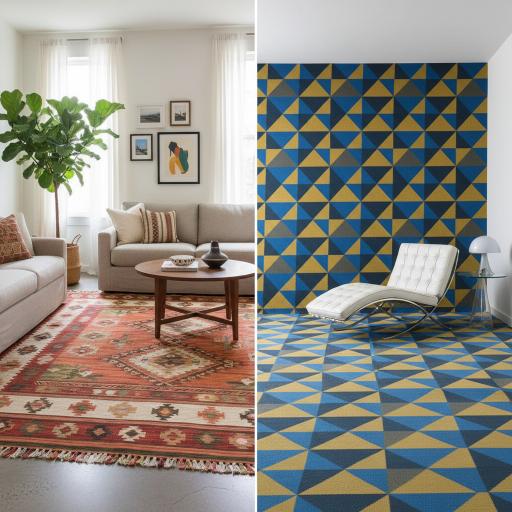
A kilim rug is one of the most culturally expressive and historically meaningful floor coverings available in the entire spectrum of residential decorating options, and its combination of flat-woven construction, bold geometric patterns derived from ancient Anatolian, Persian, and Central Asian weaving traditions, and the warm, earthy natural dye palette that characterizes authentic kilims creates a floor element of extraordinary visual complexity and cultural resonance that enriches any room it occupies with a layer of global aesthetic intelligence and artisanal heritage that manufactured alternatives cannot approach. The flat-weave construction of a kilim gives it a sleek, graphic quality that distinguishes it from pile rugs and allows the bold geometry of its pattern to register with maximum visual clarity, making it one of the most pattern-forward floor covering choices available while retaining the natural fiber authenticity and cultural richness that makes kilims enduringly popular across generations and design cycles.
A geometric patterned wall-to-wall carpet brings the bold, graphic energy of kilim-inspired or contemporary geometric design to the entire floor plane of a room in a way that creates an immersive, total pattern environment of remarkable visual impact and contemporary design confidence. The scale at which geometric pattern can be applied in a wall-to-wall carpet format, covering every centimeter of floor to the room’s walls, creates a spatial experience of pattern immersion that the bounded area of even a large kilim rug within a larger plain floor cannot generate, and this quality of total environmental pattern is one of the most distinctive and memorable interior experiences available from any floor covering choice.
7. Runner Rug vs Hallway Carpet
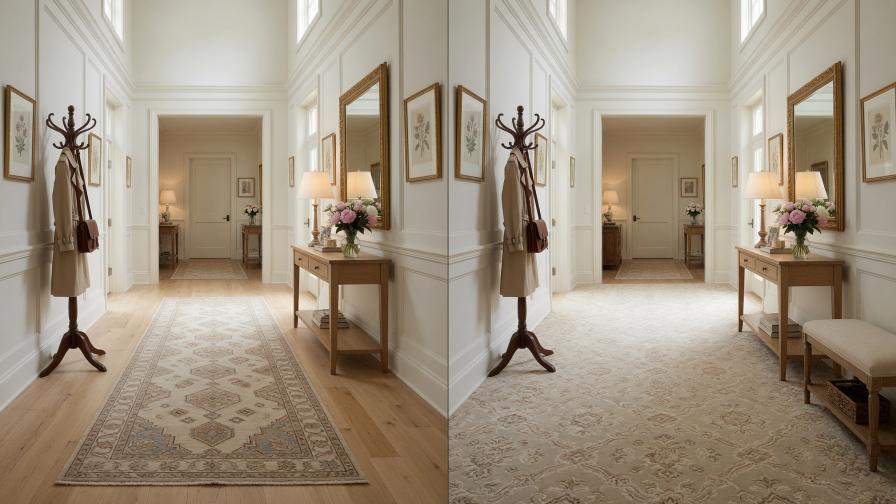
A hallway runner rug is the most stylistically expressive and practically flexible entrance floor treatment available, allowing the visual character of the hallway to be established through the specific design, color, and cultural origin of a carefully chosen runner rather than the more anonymous and uniform quality of fitted carpet, while leaving the floor material beneath visible at the borders as a contrasting frame that gives the runner a defined, deliberate presence. The runner format also provides the significant practical advantage of being removable for cleaning, rotation, and replacement when wear patterns or changing aesthetic preferences make a change desirable, without the disruption and expense that removing and replacing fitted hallway carpet entails. A well-chosen hallway runner in a pattern that reflects the personality and aesthetic values of the household makes a memorable and characterful first impression on arriving guests.
Fitted hallway carpet creates the most complete and seamlessly finished entrance experience available, covering every centimeter of the hallway floor including the stair edges, landing areas, and door thresholds in a continuous, unified surface that gives the entrance a quality of finished completeness and careful attention to detail that a runner rug leaving uncarpeted floor borders visible at each side cannot provide with the same total resolution. The acoustic benefit of wall-to-wall hallway carpet is particularly significant in multi-story homes where the hallway and staircase are the primary noise transmission routes between floors, and the dense fiber coverage of fitted carpet provides substantially more sound absorption and impact noise reduction than a runner on a hard floor, making the choice of fitted carpet over a runner rug in a hallway a potentially important contribution to the overall acoustic quality and privacy of the home.
8. Layered Rug Look vs Patterned Carpet
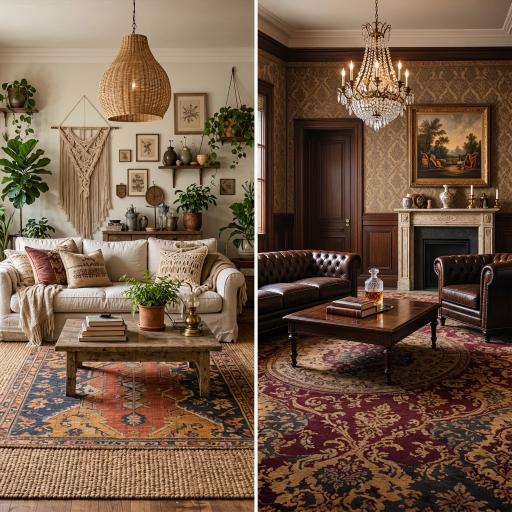
The layered rug look is the most creatively adventurous and personally expressive approach to floor decoration available in residential interior design, combining two or more rugs of different sizes, patterns, origins, and textures in a single floor arrangement that creates a richly layered, collected quality that speaks directly to the bohemian, eclectic, and globally influenced aesthetics that have dominated aspirational interior design culture for the past decade. The beauty of the layered rug arrangement is that it can be composed from rugs acquired across different time periods, different travels, and different budget levels, with the layering itself creating a design cohesion from disparate elements that makes the floor look more considered and interesting than any single rug, however beautiful, could achieve alone. The flexibility to rearrange, substitute, or add individual layers as the collection grows and taste evolves gives the layered look an organic, living quality that fixed floor coverings structurally cannot provide.
A richly patterned wall-to-wall carpet achieves the immersive pattern quality that the layered rug look approximates but in a single, seamlessly unified floor surface that covers the entire room rather than defining a central zone within it. The key advantage of wall-to-wall patterned carpet over the layered rug approach in a room where total pattern coverage is the desired aesthetic outcome is the seamless, uninterrupted quality of the patterned surface from wall to wall, without the visible borders of individual rugs or the gap between the outermost rug edge and the room’s perimeter walls. This seamlessness creates an all-encompassing pattern environment of complete spatial resolution that the inherently bounded and interrupted nature of even the most generously layered rug arrangement cannot fully replicate.
9. Neutral Rug vs Bold Colored Carpet
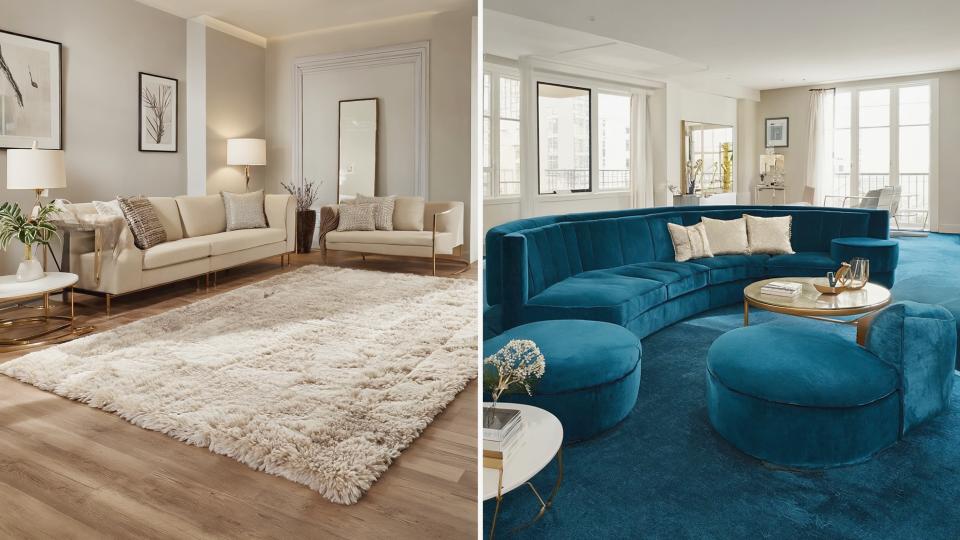
A neutral area rug is the most versatile and compositionally flexible of all rug choices, providing a warm, calm foundation for the furniture arrangement and decorating scheme above it without asserting its own color or pattern strongly enough to constrain the choices that can be made in every other element of the room. The neutral rug’s primary design function is to ground and unify the seating arrangement while contributing warmth and texture to the floor plane without competing with the upholstery, artwork, and decorative objects that carry the room’s color and pattern narrative at higher levels. This self-effacing, supportive quality makes the neutral rug the choice of designers who want maximum freedom to develop the room’s decorating story through furniture and accessories rather than through the floor itself.
A bold colored wall-to-wall carpet makes the floor itself the primary color statement of the room, reversing the conventional hierarchy in which walls and upholstery carry the dominant color while the floor remains relatively neutral and recessive. The deep jewel tones of a quality wool carpet in teal, burgundy, forest green, or sapphire blue create an immersive color experience of extraordinary richness and visual impact that makes every other element in the room appear to float within a pool of saturated, enveloping color, and this quality of total chromatic immersion is one of the most distinctive and memorable interior experiences available from any single decorating decision. Bold carpet requires confidence, simplicity in the surrounding decoration, and a willingness to let the floor be the dominant design statement in the room.
10. Cowhide Rug vs Textured Loop Carpet
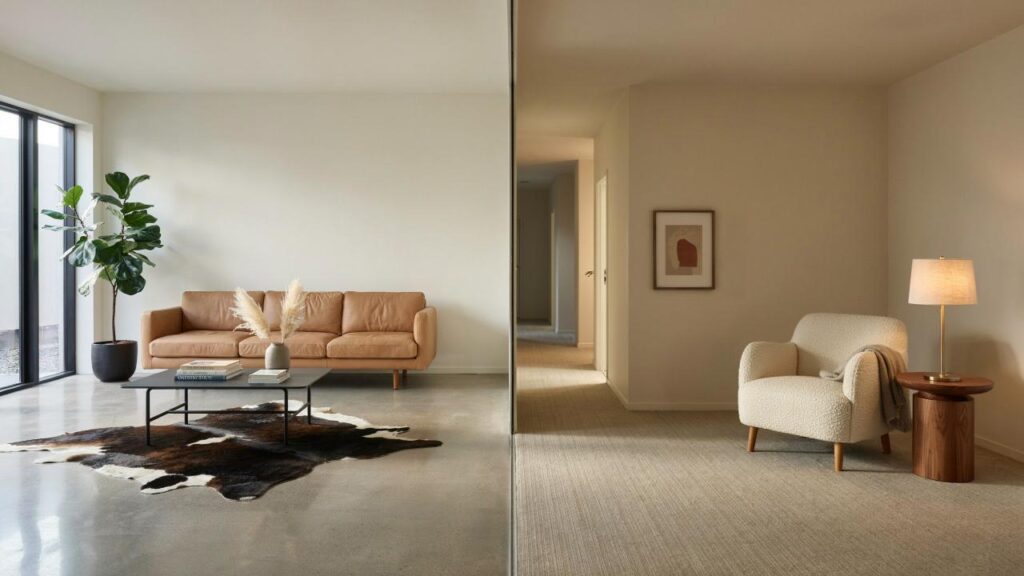
A cowhide rug is the most dramatically natural and sculpturally distinctive of all floor coverings, and each individual piece, with its unique combination of markings, color variations, and the organic shape that preserves the natural contour of the animal’s hide, creates a floor element of complete irreproducibility and genuine material character that woven, tufted, or manufactured alternatives can approach in concept but never in the specific quality of authentic natural origin. The graphic quality of a black and white cowhide, with its bold, abstract pattern of dark and light zones that no two hides ever replicate in precisely the same arrangement, creates one of the most visually striking floor elements available in interior design, and its combination of natural animal texture with a graphic, almost painterly visual quality gives it a character that sits comfortably in both contemporary minimalist and rustic industrial interior contexts.
Textured loop pile wall-to-wall carpet is the most architecturally subtle and design-intelligent of all fitted carpet options, using the three-dimensional surface quality of looped pile construction to create a floor covering of visual interest and tactile richness that plain cut pile carpet lacks while maintaining the restrained, sophisticated neutrality that allows it to serve as an elegant background for the room’s furniture and decoration rather than competing with it as a visual statement in its own right. The characteristic surface of loop pile carpet, with its regular, slightly raised loop texture that catches light and creates subtle shadow patterns across the floor plane, adds a layer of quiet visual complexity to the room that flat, cut pile equivalents cannot provide, and this textural quality is particularly valued in rooms where the overall design scheme is predominantly plain and neutral and the floor represents the primary opportunity to introduce tactile interest at ground level.
11. Moroccan Beni Ourain Rug vs Plush Shag Carpet
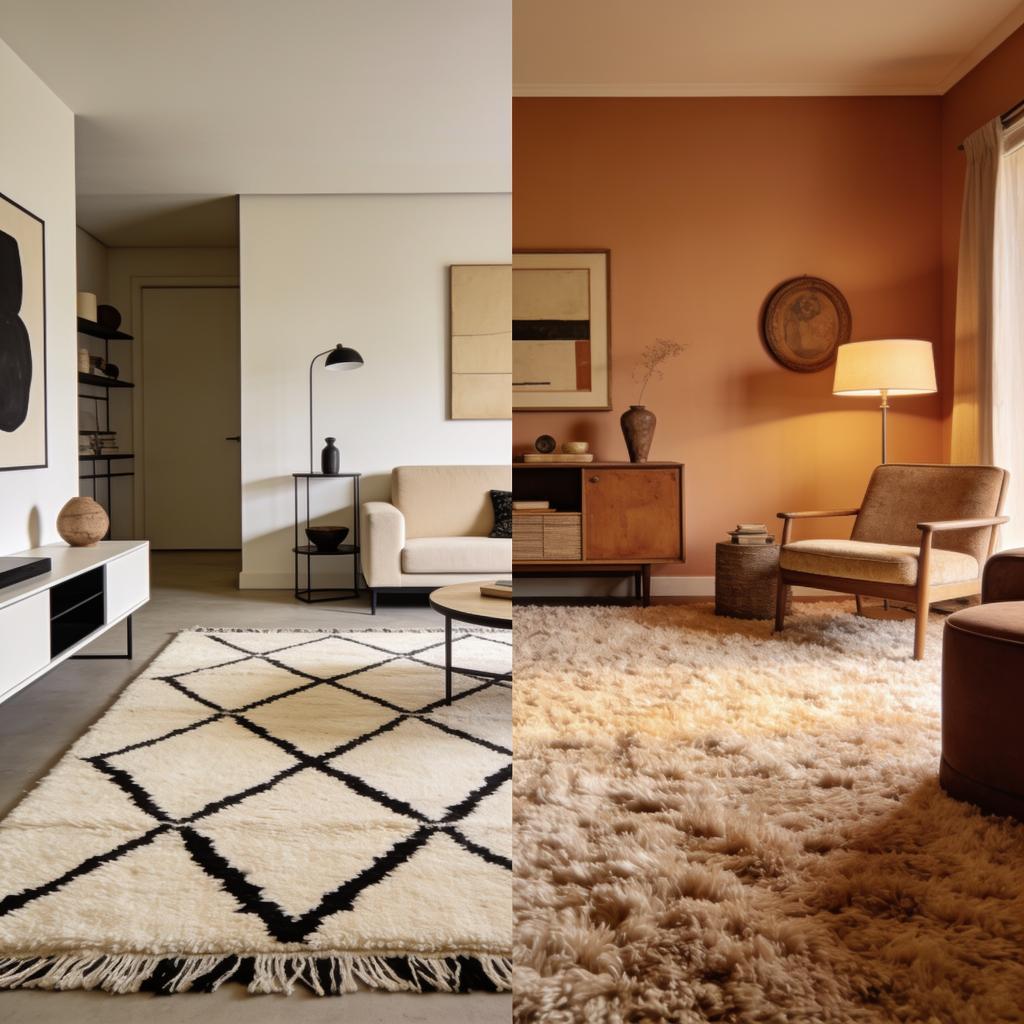
A Moroccan Beni Ourain rug is one of the most culturally authentic and design-influential floor coverings in the entire contemporary interior design canon, and its combination of handwoven natural undyed wool in a creamy off-white ground, simple black geometric symbols derived from Berber tribal weaving traditions of the Atlas Mountains, and the deep, luxurious pile that results from the traditional hand-knotting technique gives it a quality of material authenticity, cultural resonance, and visual sophistication that has made it the defining floor covering of the organic modern interior aesthetic that dominates contemporary design culture. Every genuine Beni Ourain rug is woven by hand by Berber women in the Atlas Mountains using traditional techniques unchanged for centuries, giving each piece a layer of human history and craft authenticity that machine-made alternatives, however beautiful, structurally cannot possess.
A plush shag wall-to-wall carpet is the most unabashedly hedonistic and tactilely indulgent of all fitted carpet options, and its long, deep pile that invites bare feet to sink into its luxurious depth creates a floor experience of pure physical pleasure that more restrained carpet constructions, however elegant and practically sensible, cannot approach with the same immediate sensory generosity. The shag carpet’s association with the warm, maximalist interiors of the nineteen seventies has evolved into a contemporary appreciation for its genuine comfort qualities and the particular quality of cozy, enveloping warmth it brings to a bedroom or living room, and the availability of shag pile carpet in natural fiber options including wool and cotton has given it a new credibility within design-conscious interiors that the synthetic versions of previous decades could not claim.
12. Indoor-Outdoor Rug vs Hard-Wearing Contract Carpet
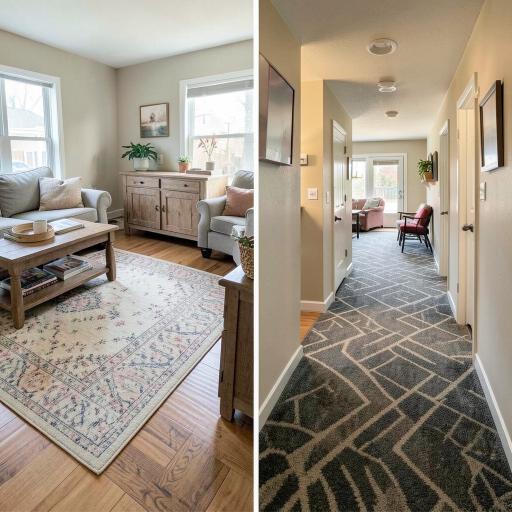
An indoor-outdoor rug is the most practically resilient and lifestyle-compatible area rug option available for high-traffic domestic spaces, family rooms, kitchen areas, mudrooms, and any other location where the inevitable spills, tracked dirt, pet hair, and physical demands of energetic family life require a floor covering that can be cleaned quickly, thoroughly, and repeatedly without deteriorating in appearance or fiber quality in the way that more delicate natural fiber rugs inevitably do under the same conditions. The polypropylene or recycled plastic fiber construction of most indoor-outdoor rugs makes them genuinely waterproof, stain-resistant, and resistant to fading from both UV light and cleaning chemicals, and many can be simply hosed down outdoors or wiped clean with a damp cloth in a few minutes, a practical convenience that natural fiber and wool rugs cannot approach.
Hard-wearing contract carpet, originally developed for commercial applications in hotels, offices, and public buildings where durability and cleanability under heavy foot traffic are the primary performance requirements, has become an increasingly popular choice for residential high-traffic areas precisely because its commercial-grade fiber construction and dense, low-pile format provides significantly greater durability and practical performance than standard residential carpet grades while maintaining a professional, sophisticated appearance that suits contemporary domestic interiors as well as the commercial environments it was originally designed to serve. Contract carpet in a residential setting brings genuine twenty-year durability to areas where standard residential carpet would show significant wear within five, making it one of the most intelligent long-term value flooring investments available for heavily used family spaces.
13. Handmade vs Machine-Made: Rug Quality Comparison
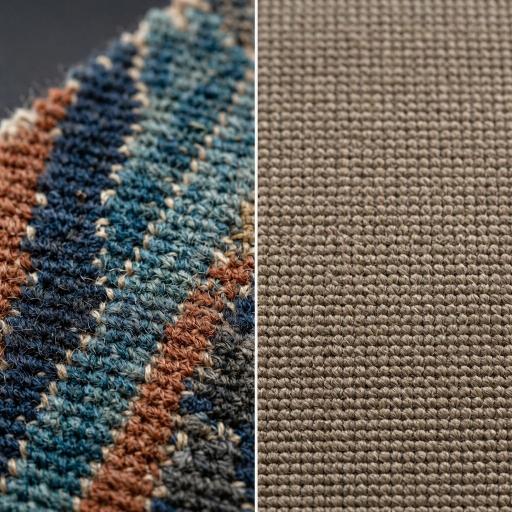
A handmade rug represents one of the most significant and meaningful investments available in residential interior decorating, and the qualities that distinguish it from a machine-made equivalent, the slight irregularities in pile height, the natural variation in dye uptake that creates the characteristic abrash or color variation across the rug surface, the knot density and pile construction that can only be achieved through individual human attention to each element of the weaving process, and the human time and skill embodied in a piece that may have taken a single weaver months or years to complete, combine to create a floor covering of genuine depth and authenticity that a machine-made equivalent, however accurately it replicates the surface appearance, cannot possess in the same fundamental way. The investment in a handmade rug is also a financial investment, as the value of handmade rugs from reputable weaving traditions typically appreciates over time rather than depreciating.
A machine-made rug represents the most democratically accessible interpretation of the visual and aesthetic qualities associated with traditional handmade rug traditions, making the patterns, color palettes, and general character of Moroccan, Turkish, Persian, and Scandinavian weaving traditions available at price points that genuine handmade equivalents cannot approach, and serving households who want the aesthetic contribution of a beautiful patterned rug without the financial investment that authentic handmade pieces require. The consistency and precision of machine production that distinguishes machine-made rugs from their handmade counterparts is not an absolute disadvantage in all contexts, and the perfectly even pile height, color consistency, and geometric precision of a machine-made rug suits contemporary minimalist and Scandinavian-influenced interiors where the slight irregularities of handmade rugs would create a visual tension with the clean, precise aesthetic of the surrounding design.
14. Stair Runner Rug vs Fitted Stair Carpet
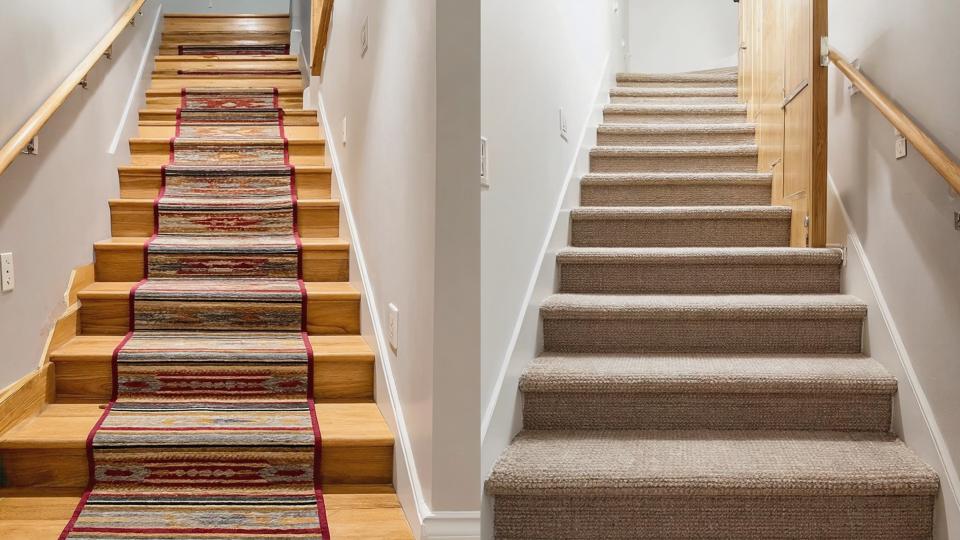
A stair runner rug is the most design-forward and architecturally dramatic treatment available for a staircase, and its combination of a centrally positioned patterned runner revealing the natural wood of the stair tread on both sides creates a visual composition of exceptional elegance and spatial interest that transforms the staircase from a purely functional circulation element into a prominent architectural feature of the home’s interior. The stair runner format also provides the practical advantage of protecting the central wear zone of each stair tread, which receives the most foot traffic, while allowing the natural wood at the sides to remain visible and appreciated, and the runner can be removed, cleaned, and replaced independently of any refinishing of the wooden treads, giving the staircase flexible maintenance options that fitted carpet cannot provide.
Fitted stair carpet is the most complete and acoustically effective staircase floor treatment available, covering every centimeter of each tread and riser in a continuous, unified surface that eliminates the impact noise of footfall on hard stair treads that is one of the most disruptive acoustic issues in multi-story homes, particularly in households with young children whose enthusiastic use of the staircase at all hours of the day and night creates a level of impact noise transmission between floors that only the dense fiber coverage of properly fitted stair carpet can effectively absorb and attenuate. Fitted stair carpet also provides the most complete safety surface for staircase use, with consistent grip and cushioning across the full width of every tread eliminating the potential trip hazard of runner edges and the slippery exposed wooden tread surface at the runner margins.
15. Luxury Rug vs Premium Carpet: The Investment Question
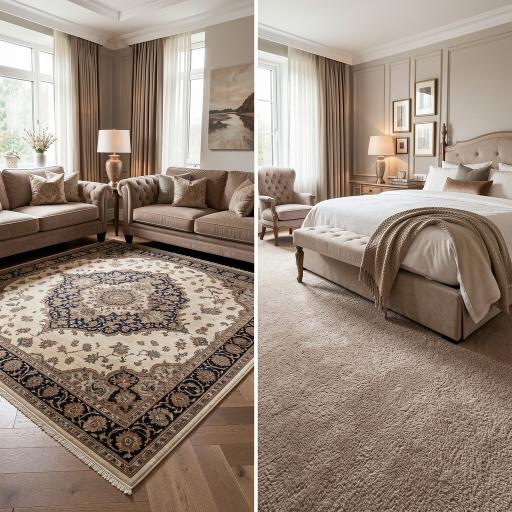
A luxury area rug as a single investment statement piece represents one of the most sophisticated and enduringly valuable decorating decisions available to a homeowner with a genuine appreciation for the highest level of craft, material quality, and design intelligence available in the floor covering category. A hand-knotted silk rug from Qom or Isfahan, a fine antique Heriz or Tabriz in exceptional condition, or a contemporary handmade piece from a celebrated designer using natural dyes and traditional knotting techniques represents not just a floor covering but a genuine work of applied art whose financial value typically holds or appreciates over decades of careful ownership while providing daily aesthetic pleasure and physical service as a functional floor covering. The decision to invest significantly in a single exceptional rug for the primary living space, rather than distributing the same budget across multiple moderate-quality pieces throughout the home, is the approach that consistently produces the most beautiful and most enduringly satisfying result.
Premium wall-to-wall carpet of the highest available quality represents the most complete and sensory immersive floor covering investment available for bedrooms and living rooms where the total comfort, acoustic quality, and tactile luxury of the floor experience throughout the entire room, from wall to wall and corner to corner, is the primary priority. A premium grade pure wool carpet in a deep, generous pile weight, professionally fitted with the highest quality underlay, creates a floor experience of total, enveloping physical luxury that the most exceptional area rug in the same room, however beautiful and valuable, cannot replicate across the complete floor plane of the space. The investment decision between a luxury rug and premium carpet ultimately reduces to a choice between the concentrated excellence of a single exceptional piece within a larger floor composition and the total, seamless coverage of premium quality throughout the complete floor area, and the correct answer depends entirely on which experience of floor luxury is most valued and most appropriate for the specific room and household in question.