15 Organic Modern Interior Design Ideas to Try
1. Layer Natural Textures Throughout Every Room
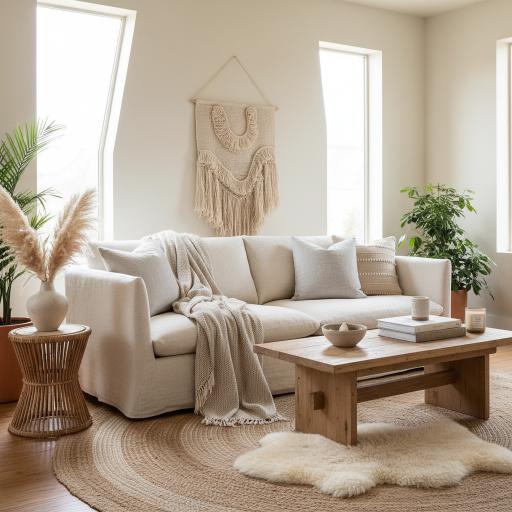
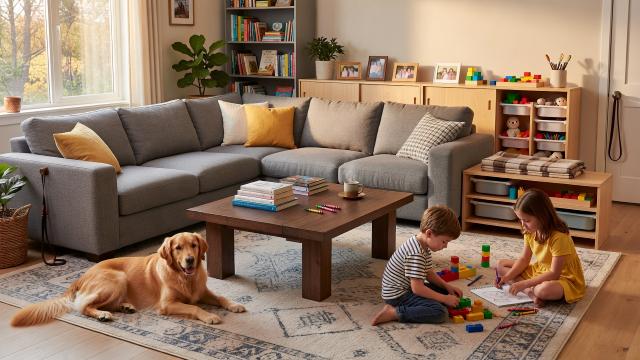
Natural textures are the soul of organic modern interior design, and layering them thoughtfully throughout every room is the single most effective way to achieve the warm, grounded aesthetic that defines the style. Linen upholstery, jute rugs, rattan furniture, woven baskets, and raw wood surfaces all bring a tactile richness to a space that no painted or manufactured surface can replicate. When these materials are layered together in a single room, they create a depth and warmth that feels both sophisticated and deeply human.
The art of layering textures successfully lies in varying the scale and weight of each material so that no single texture dominates the composition. A chunky jute rug beneath a smooth linen sofa, paired with a rough-hewn wooden coffee table and a finely woven rattan pendant light, creates a hierarchy of textures that keeps the eye moving and the room feeling alive. Keep your color palette consistent across all these materials, working within a range of warm neutrals, to ensure that the variety of textures reads as cohesive and intentional rather than eclectic and busy.
2. Choose a Warm, Earthy Color Palette
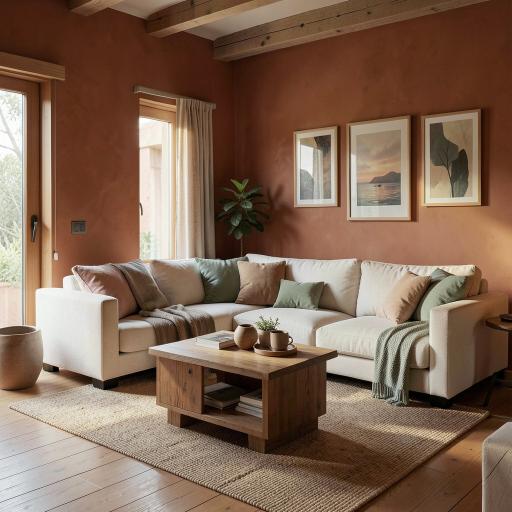
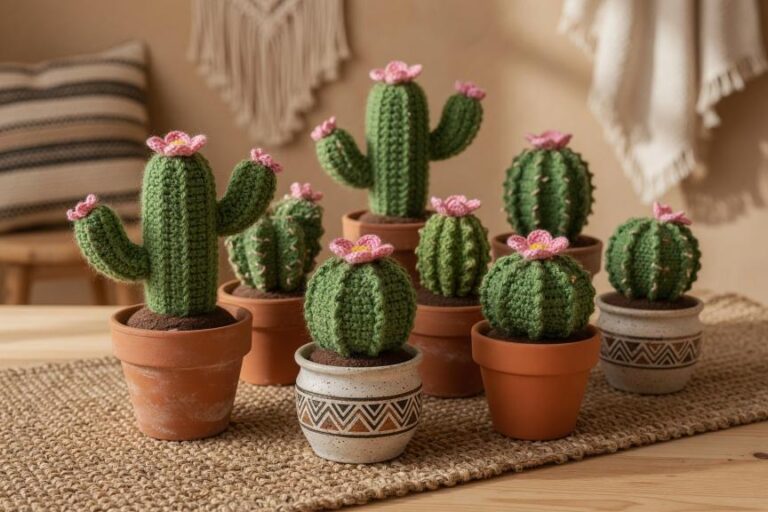
The color palette of organic modern interior design is rooted in the natural world, drawing from the warm, grounded tones of earth, stone, sand, and vegetation to create interiors that feel calm, nurturing, and deeply connected to nature. Terracotta, warm white, sandy beige, olive green, burnt sienna, and dusty clay are the signature colors of this aesthetic, and they work together because they all share the same warm undertone that makes a room feel cohesive and inviting rather than disjointed and cold.
Building an organic modern color palette requires choosing one dominant tone for the walls and large surfaces, one or two mid-tones for furniture and soft furnishings, and a single deeper accent color for cushions, throws, and decorative objects. Terracotta has become the defining accent color of the organic modern movement, appearing on Pinterest in everything from painted walls to ceramic vases and woven cushion covers. Whatever combination you choose, the golden rule is to keep every tone warm, muted, and drawn from nature rather than from a synthetic or artificial color family.
3. Bring in Sculptural, Organic-Shaped Furniture
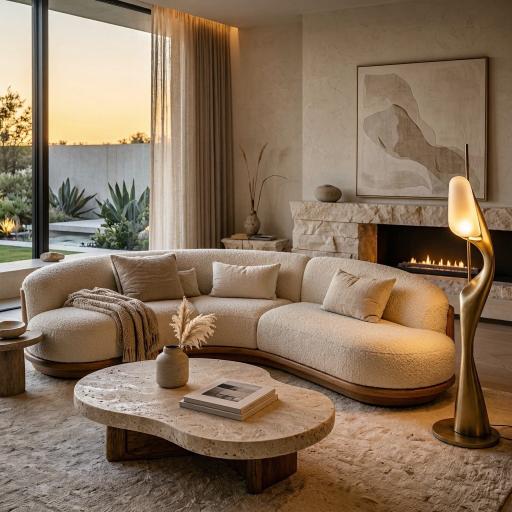
Organic modern furniture is characterized by curved, flowing, sculptural forms that reject the hard right angles of conventional contemporary design in favor of shapes drawn from nature, the human body, and abstract art. A curved bouclé sofa, a kidney-shaped coffee table in travertine or light wood, a sculptural armchair with a rounded silhouette, and a floor lamp with an organic, asymmetric form are the kinds of pieces that give an organic modern interior its distinctive, softly sophisticated character.
Investing in even one or two truly sculptural furniture pieces can transform the entire feeling of a room, shifting it from simply neutral and natural to genuinely considered and design-forward. When shopping for organic modern furniture, look for pieces where the form itself is the statement, independent of color or material. A chair that would be beautiful even if it were made entirely of white paper, a table whose silhouette you would recognize as a piece of sculpture, these are the kinds of forms that define the organic modern aesthetic and make a room feel like it has been genuinely designed rather than simply furnished.
4. Use Natural Stone as a Feature Material
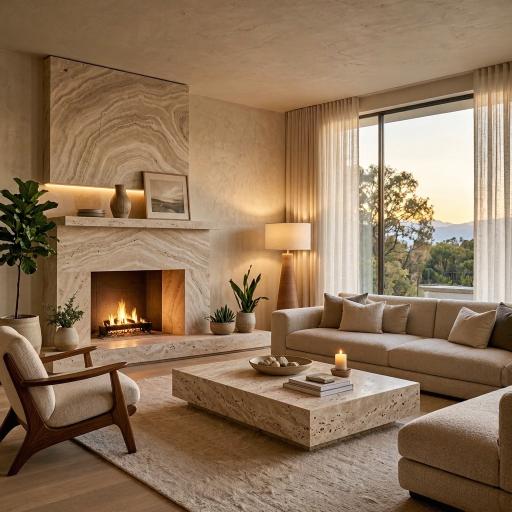
Natural stone is one of the most powerful and versatile materials in organic modern interior design, bringing geological history, unique veining, and a sense of permanence to a space that no manufactured material can replicate. Travertine, with its warm beige tones and distinctive pitted surface, has become particularly synonymous with the organic modern aesthetic, appearing on Pinterest in everything from coffee tables and side tables to fireplace surrounds, bathroom floors, and kitchen countertops. Its warm, sandy color and natural texture make it the ideal material bridge between modern form and organic soul.
Introducing natural stone into your interior does not require a major renovation. A travertine side table, a marble object on a coffee table tray, a stone fruit bowl, or a set of stone coasters can all bring the material’s distinctive energy into a room at a modest investment. For a more dramatic statement, consider a stone-clad fireplace surround, a stone kitchen backsplash, or a stone bathroom vanity top. The key is to let the natural variation and veining of the stone be visible and celebrated rather than hidden or minimized, as this natural imperfection is precisely what gives the material its organic modern appeal.
5. Incorporate Live Edge and Raw Wood Elements
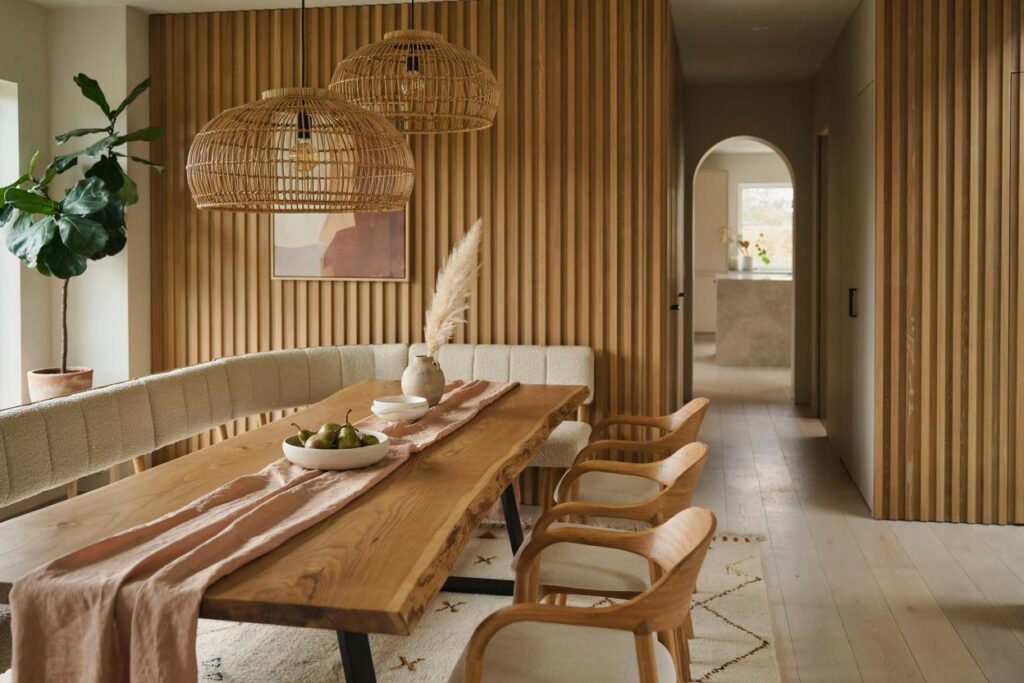
Live edge furniture, where the natural outer edge of the wood slab is preserved and celebrated rather than cut away into a straight line, is one of the most distinctive and Pinterest-celebrated elements of organic modern interior design. A live edge dining table, coffee table, or floating shelf brings the raw, unmediated beauty of nature directly into the home in a way that no other furniture form can match. Each piece is genuinely unique, carrying the exact shape of the tree from which it came, which gives it a depth of character and authenticity that mass-produced furniture can never achieve.
Beyond live edge pieces, incorporating raw and minimally processed wood throughout your interior in other forms adds to the organic modern atmosphere significantly. Rough-sawn timber shelving, hand-turned wooden bowls, sculptural driftwood objects, and furniture with visible wood grain all contribute to the sense that the natural world has been thoughtfully invited into the home rather than kept at a polished, manufactured distance. Choose wood tones in the warm spectrum, walnut, oak, ash, and acacia, that complement your earthy color palette and add depth without dominating the overall scheme.
6. Layer Rugs for Warmth and Texture
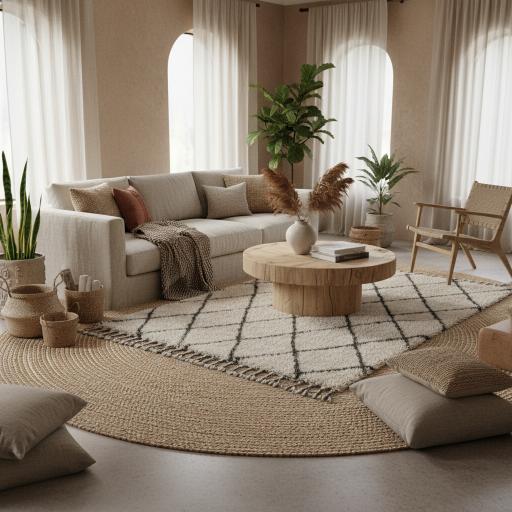
Layering rugs is one of the most creative and characterful techniques in organic modern interior styling, and it is a practice that has its own thriving corner of Pinterest dedicated entirely to the art of combining floor coverings in ways that add warmth, texture, and visual complexity to a room. The classic organic modern approach is to use a large, flat-weave natural fiber rug, typically jute, sisal, or seagrass, as the base layer and then place a smaller, more decorative rug on top to define the seating zone and introduce pattern or additional color.
A vintage Moroccan rug, a hand-knotted Beni Ourain with its characteristic black geometric patterns on a cream ground, or a simple flatweave kilim in warm earthy tones all work beautifully as the top layer in a rug pairing. The key is to ensure that the two rugs share at least one color or tone in common so that the layering reads as intentional rather than accidental. Layering rugs also has a practical benefit in rooms where the base rug alone may not provide enough cushioning or warmth, adding both physical comfort and visual richness to the floor plane.
7. Style With Organic and Handmade Ceramics
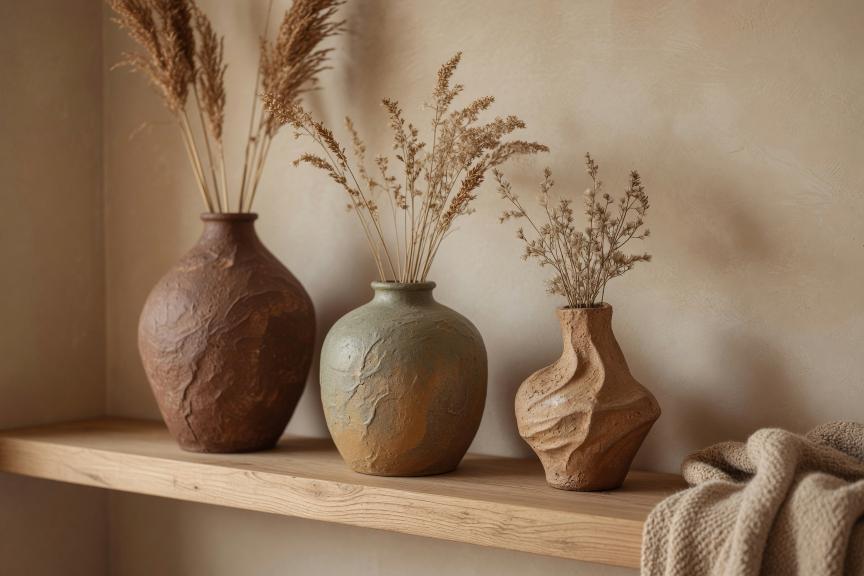
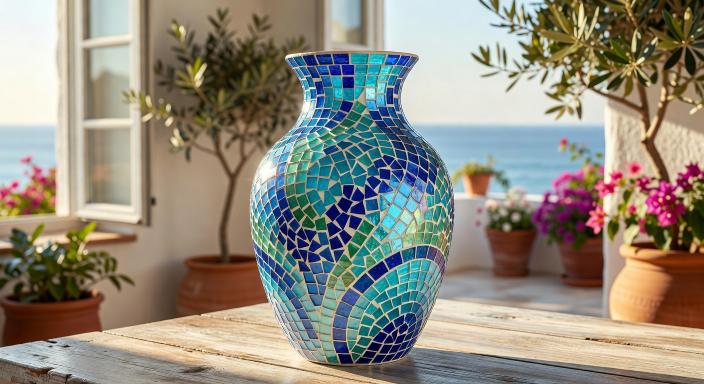
Handmade ceramics are one of the most important and expressive styling tools in organic modern interior design, bringing the visible marks of human hands, natural clay tones, and the beautiful imperfection of artisan craft into a space in a way that mass-produced objects simply cannot. A collection of handmade ceramic vases in varying heights and warm earthy tones, a set of irregular stoneware bowls on a kitchen shelf, or a single sculptural ceramic vessel on a coffee table all add an authenticity and warmth to a room that contributes enormously to the organic modern atmosphere.
The beauty of collecting handmade ceramics for your interior is that each piece carries its own history and character, with slight variations in glaze, form, and surface texture that make a collection feel genuinely curated over time rather than purchased all at once. Look for pieces in warm neutrals, terracotta, sandy beige, warm white, and dusty sage, with matte or subtly textured glazes rather than high-gloss finishes. Dried botanicals, pampas grass, and sculptural branches displayed in ceramic vases are among the most universally loved and Pinterest-popular organic modern styling combinations.
8. Use Linen and Bouclé for Soft Furnishings
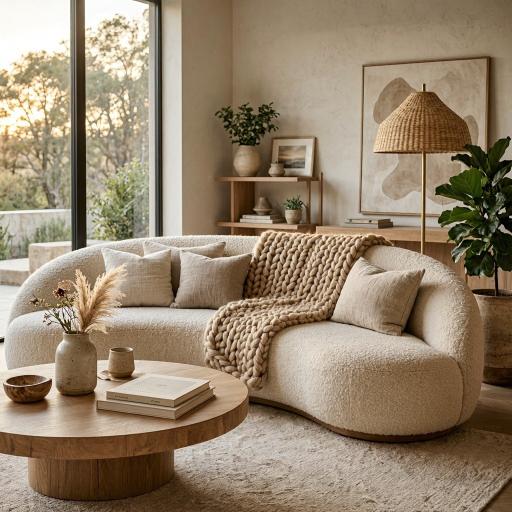
Linen and bouclé are the two fabrics most closely associated with the organic modern interior aesthetic, and their tactile, natural qualities make them the ideal soft furnishing choices for a design philosophy rooted in warmth, authenticity, and connection to the natural world. Linen, with its slightly rough weave, natural slub texture, and tendency to drape beautifully without being precious, brings an effortless, lived-in quality to sofas, cushions, curtains, and bed linen that perfectly captures the relaxed sophistication of organic modern style.
Bouclé, the looped, textured fabric that has become one of the most recognizable and Pinterest-saturated materials of contemporary interior design, adds a layer of soft luxury and tactile richness that complements the rawer textures of natural fiber rugs and raw wood in an organic modern scheme. A curved bouclé sofa or armchair in warm white or cream is perhaps the single most iconic piece of furniture in the organic modern canon, offering a sculptural form wrapped in an irresistibly touchable material that invites you to slow down and sink in. Pair with linen cushions in complementary earthy tones for a layered, considered effect.
9. Hang Woven and Textile Wall Art
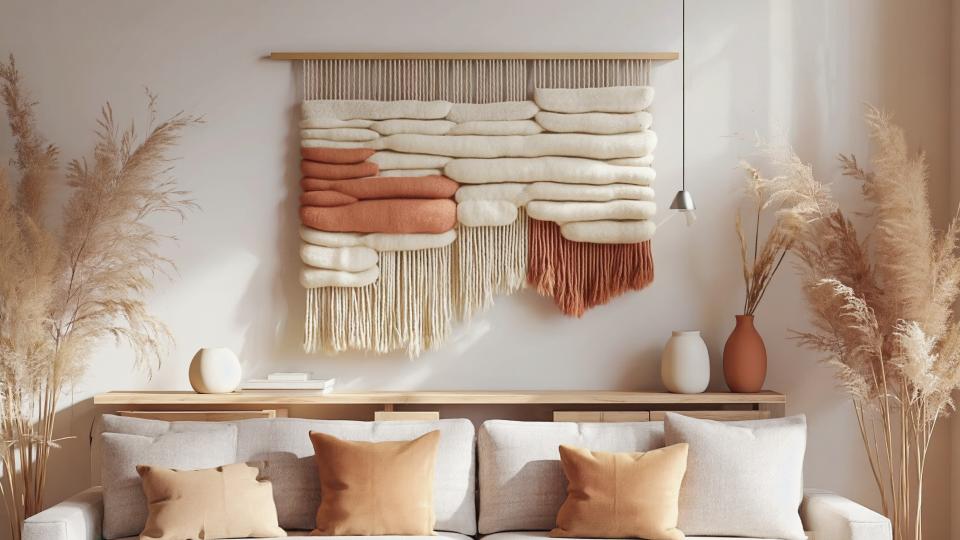
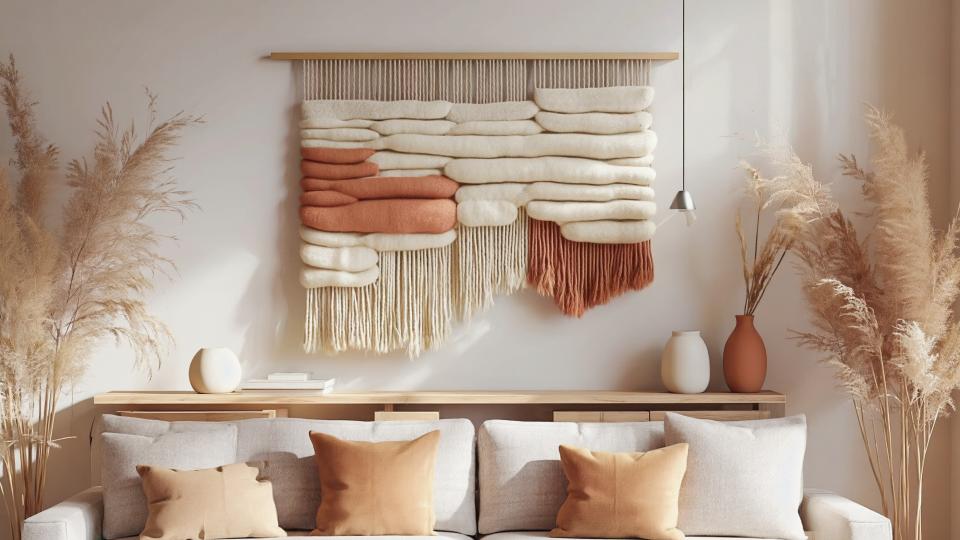
Woven and textile wall art is one of the most distinctive and expressive elements of organic modern interior design, offering an alternative to framed prints and canvas paintings that introduces texture, warmth, and artisan craft directly onto the walls of a room. A large woven wall hanging above a sofa immediately establishes the organic modern character of a space, bringing natural fiber, handmade quality, and subtle color into the composition in a way that a flat, framed artwork simply cannot. This is why textile wall art features so prominently on Pinterest organic modern inspiration boards.
Macramé, hand-loomed tapestries, and woven fiber pieces in natural, undyed materials are the most authentic choices for an organic modern scheme, though pieces that incorporate warm earthy dyes in terracotta, rust, sage, and sandy tones add welcome color while maintaining the natural, handmade quality that the aesthetic demands. When choosing the scale of your textile wall art, err on the side of larger rather than smaller, as a generously sized piece makes a bolder statement and better anchors the furniture arrangement beneath it than a small piece that gets lost on a large wall.
10. Design With Negative Space and Breathing Room
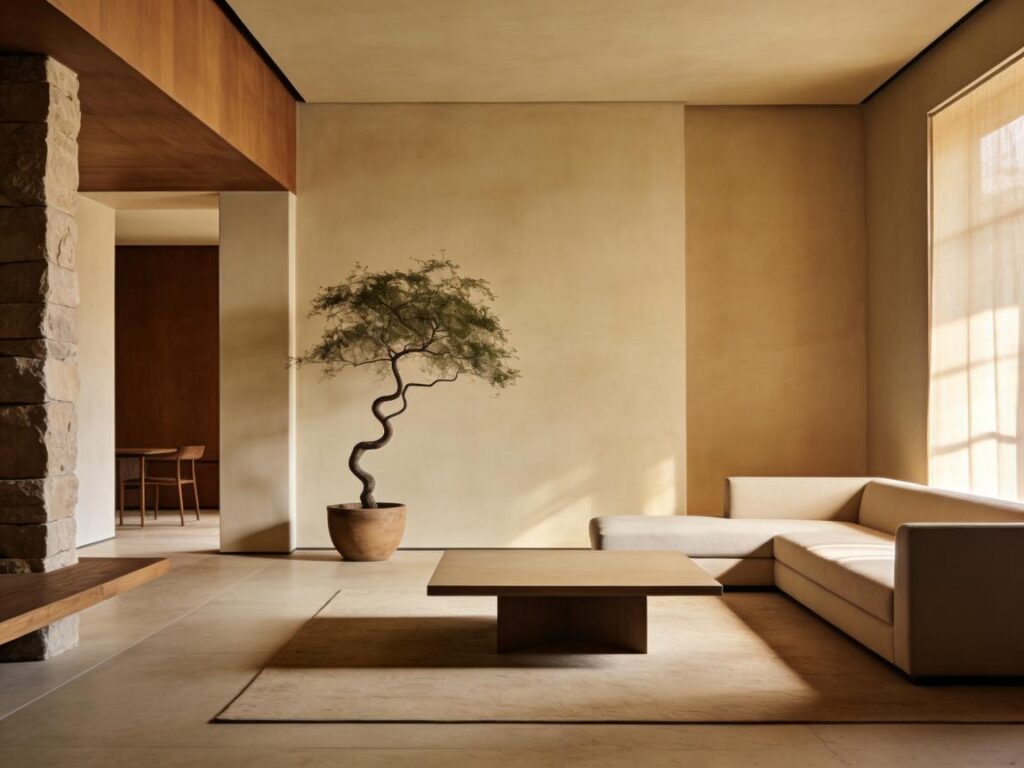
Organic modern interior design is not about filling every surface and corner with beautiful objects but about creating spaces that breathe, where the eye has room to rest and the body feels genuinely at ease. Negative space, the deliberately empty areas of a room, is as important as the objects and furniture that occupy it, and the restraint required to leave space intentionally empty is one of the most sophisticated and difficult skills in interior design. The most impactful organic modern rooms on Pinterest are almost always defined as much by what is not in them as by what is.
Achieving meaningful negative space in a room requires editing your furniture and objects down to only those that genuinely contribute to the composition, then resisting the impulse to fill remaining gaps with additional pieces. Leave floor space open around your furniture arrangement, allow walls to breathe with generous spacing between artwork and objects, and keep surfaces edited to only the most intentional and beautiful pieces. The result is a room that feels calm, considered, and expansive regardless of its actual dimensions, and that communicates a level of design confidence that only restraint can achieve.
11. Introduce Indoor Trees and Large Plants
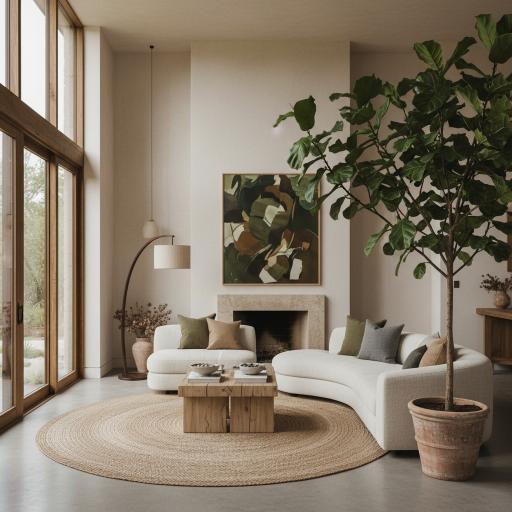
Large indoor plants and trees are among the most transformative elements in organic modern interior design, bringing vertical drama, living color, and a genuine connection to the natural world into the home in a way that no decorative object can replicate. A tall fiddle leaf fig in a terracotta or stone pot beside a sofa, a dramatic monstera with its sculptural split leaves positioned in a corner, or an olive tree in a large woven planter in a sunny spot all add an architectural quality to a room that anchors the organic modern scheme and gives it life and movement.
The scale of plant you choose matters enormously in an organic modern interior. While smaller plants contribute texture and warmth when clustered on shelves or side tables, it is the large, statement plants that truly define the aesthetic and give a room its distinctive, nature-forward character. Position your largest plant where it will have maximum visual impact, ideally beside or behind a primary seating area where it will be seen from the main viewpoint into the room, and choose a pot in a material and color that complements your overall palette, such as terracotta, raw concrete, woven rattan, or matte ceramic.
12. Choose Warm Ambient Lighting Over Harsh Overhead Light
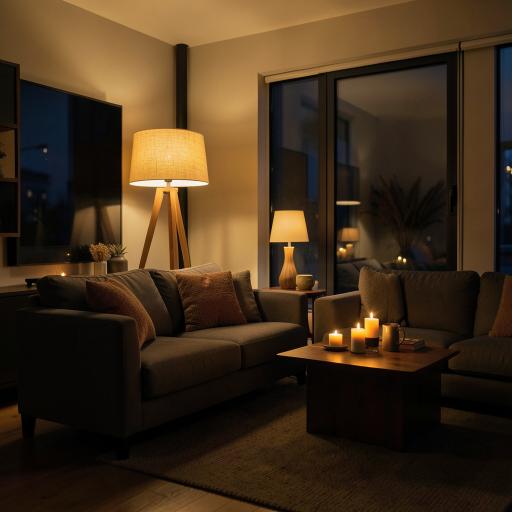
Lighting in an organic modern interior should always feel warm, layered, and atmospheric rather than bright, uniform, and overhead, and the difference between a well-lit organic modern room and a poorly lit one is often the difference between a space that feels genuinely inviting and one that simply looks good in photographs. Warm ambient lighting, achieved through floor lamps with natural linen or rattan shades, table lamps in ceramic or stone bases, and candlelight, creates the kind of golden, enveloping glow that makes an organic modern interior feel like a sanctuary.
The most effective organic modern lighting schemes layer multiple warm light sources at different heights throughout the room, with no single overhead fixture responsible for illuminating the entire space. A linen-shaded floor lamp in a corner, a ceramic table lamp on a side table, clusters of candles on the coffee table and mantle, and perhaps a woven rattan pendant over the dining table create a rich, dimensional lighting environment that shifts the atmosphere of a room from daytime functional to evening magical. Always choose bulbs in the warmest available Kelvin range, 2200 to 2700, to maintain the golden, organic quality of the light.
13. Display Dried and Preserved Botanicals
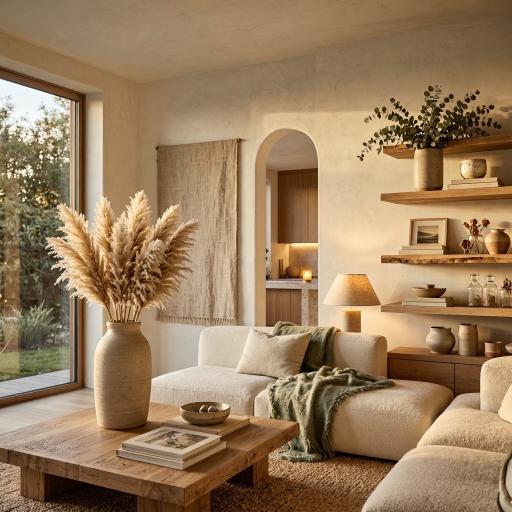
Dried and preserved botanicals have become one of the most iconic and widely shared styling elements of organic modern interior design, and their enduring popularity on Pinterest is well earned. Pampas grass, dried eucalyptus, bunches of dried lavender, sculptural dried seed heads, and preserved olive branches all bring natural form, texture, and subtle color into a room without the maintenance requirements of living plants, making them a particularly practical choice for low-light spaces or for people who travel frequently and cannot maintain watered arrangements.
The most effective dried botanical arrangements in an organic modern interior tend to be generous in scale and simple in composition, allowing the natural form of the plant material to speak for itself without being crowded by too many competing elements. A single large bunch of pampas grass in a tall ceramic vase, a cluster of dried eucalyptus branches in a stone vessel, or a collection of dried seed heads in varying heights across a shelf all create a striking visual impact that is entirely in keeping with the natural, unhurried quality of organic modern design. Choose vessels in earthy, matte tones to complement rather than compete with the botanical material they contain.
14. Layer Curtains in Natural Linen or Cotton
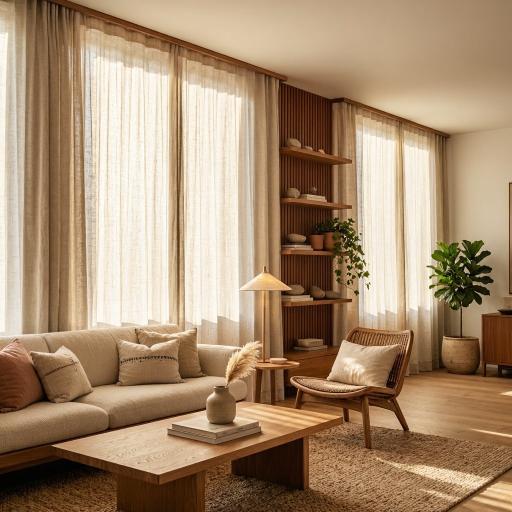
Curtains in natural linen or unbleached cotton are one of the most important and transformative soft furnishing choices in an organic modern interior, and their ability to filter light softly, move gently in a breeze, and drape in a relaxed, effortless way makes them irreplaceable in achieving the warm, lived-in quality that defines the style. Floor-to-ceiling linen curtains in warm white, natural, or oatmeal tones are the most quintessentially organic modern window treatment, softening the hard edges of walls and windows while maintaining the airy, light-filled atmosphere that the aesthetic requires.
The way you hang your curtains is as important as the fabric you choose. In an organic modern interior, curtains should always fall to the floor, ideally with a slight puddle or generous break at the hem, and should be hung as close to the ceiling as possible to maximize the sense of height and drama. Avoid stiff, structured heading tapes in favor of relaxed pinch pleats or simple eyelet headings that allow the fabric to fall in natural, unfussy folds. The overall effect should feel like the curtains have always been there, grown organically from the walls rather than installed as an afterthought.
15. Create a Cozy Reading Nook With Organic Elements
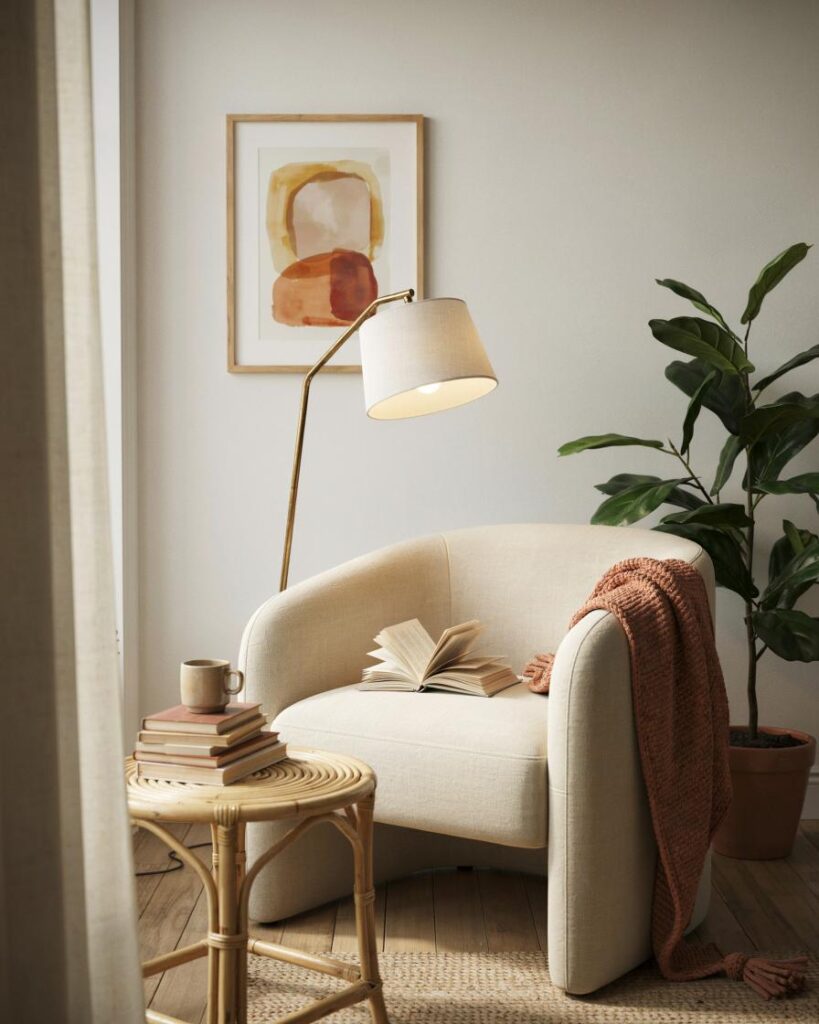
A cozy reading nook designed with organic modern elements is one of the most aspirational and consistently saved ideas on Pinterest home design boards, representing the perfect distillation of everything the aesthetic stands for: warmth, comfort, natural materials, and the creation of spaces that genuinely nourish the people who inhabit them. A curved linen armchair positioned beside a window or in a quiet corner, accompanied by a rattan side table, a warm floor lamp with a natural shade, and a chunky knit throw draped over the arm, creates an irresistible retreat within a larger room.
The styling details of an organic modern reading nook are where the personality of the space truly emerges. A stack of beautiful books on the side table, a ceramic mug beside them, a small potted plant or dried botanical arrangement within reach, and a woven basket on the floor for extra throws all contribute to the sense of a space that is genuinely lived in and loved rather than simply designed to look good. Position your nook to take advantage of natural light during the day and warm lamp light in the evening, and resist the urge to over-style it, as a reading nook should always feel like a place to escape to rather than a place to be photographed in.