17 Crochet Flowers and Plants Ideas to Make
1. Classic Crochet Rose
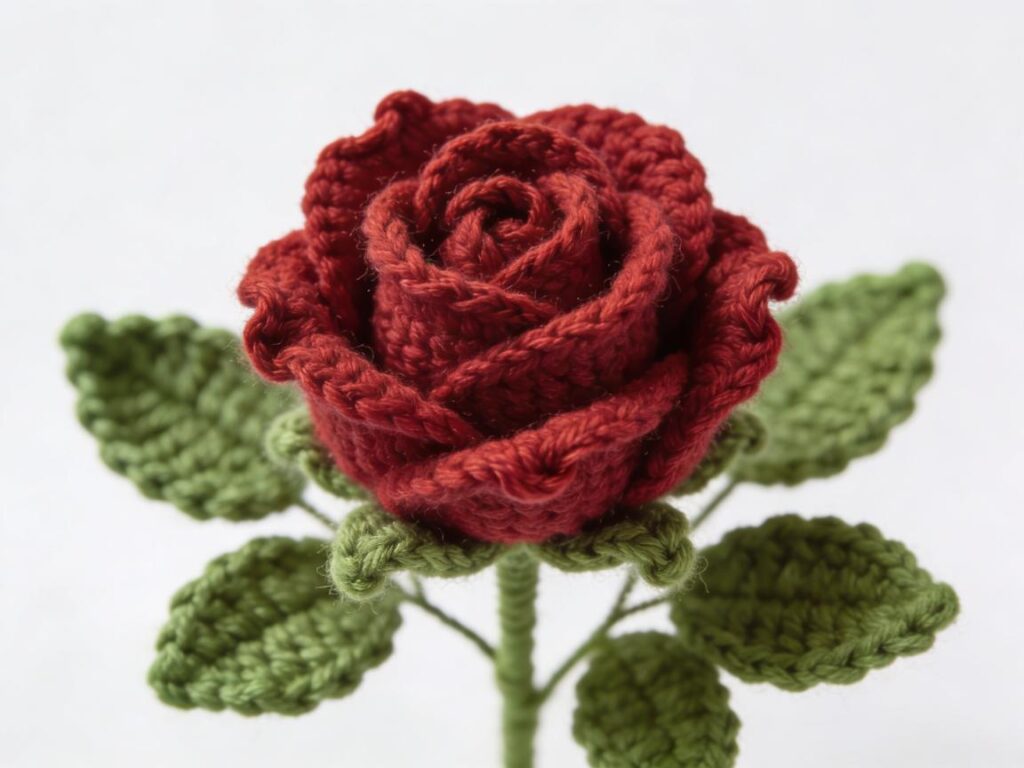
A classic crochet rose is the most beloved and enduring project in the entire world of crochet flower making, and its combination of elegant form, satisfying construction process, and extraordinary versatility makes it the starting point for virtually every crochet enthusiast who ventures into botanical making. The crochet rose achieves its characteristic spiral petal form through a deceptively simple technique of working a long strip of increasing stitches and then rolling and securing that strip into a tightly coiled center that gradually opens into the layered, dimensional bloom that everyone recognizes immediately as a rose. The finished result is so convincing and beautiful that it consistently generates disbelief that something so elegant could be made with nothing more than yarn and a hook.
The choice of yarn weight and fiber content makes an enormous difference to the character of a finished crochet rose, and experimenting with different materials is one of the most rewarding aspects of this endlessly versatile project. Fine lace-weight yarn in a pure cotton or silk blend produces roses of extraordinary delicacy and realism that are almost indistinguishable from fabric flowers at a glance, while a chunky merino wool creates bold, statement blooms with a soft, sculptural quality that works beautifully in home decor applications. Add crocheted leaves in a rich forest green, shaped with a central vein detail using a slightly smaller hook than the yarn weight technically requires, and the finished rose becomes a complete botanical composition of genuine beauty.
2. Sunflower Crochet Appliqué
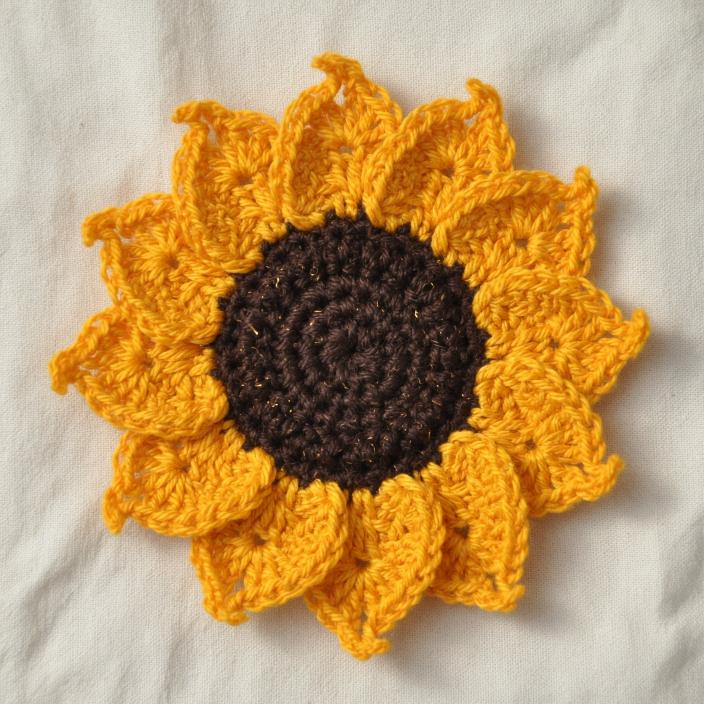
A crochet sunflower appliqué is one of the most cheerful and instantly recognizable botanical crochet projects available, and its bold, graphic form and warm golden color palette make it one of the most satisfying single-session crochet projects for makers of all experience levels. The flat appliqué construction, worked in joined rounds from the center outward, produces a crisp, defined flower form that photographs beautifully and translates perfectly onto garments, home accessories, bags, and decorative items as a versatile embellishment that adds warmth and personality wherever it is applied. On Pinterest, crochet sunflower patterns and projects have an enormous and enthusiastic following.
Begin the sunflower center with a magic ring worked in a rich dark brown or warm chocolate yarn, building up several rounds of single crochet stitches to create a dense, textured disk that mimics the characteristic seed face of a real sunflower with remarkable fidelity. Join your golden yellow yarn and work the petal round using a sequence of chain stitches and slip stitches that creates the elongated, pointed petal form characteristic of a sunflower in a single continuous round. A second round of petals worked in the spaces between the first layer adds depth and a more three-dimensional quality to the finished appliqué, and a final round of green chain stitches worked around the base creates a simple calyx that completes the botanical composition beautifully.
3. Crochet Succulent Garden
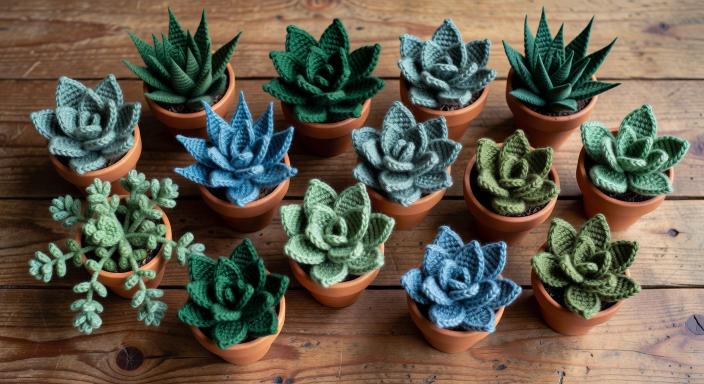
A crochet succulent garden is one of the most creative and design-forward botanical crochet projects of recent years, producing a collection of miniature planted sculptures that combine the satisfying construction of three-dimensional crochet with the enduring appeal of the succulent aesthetic that dominates Pinterest home decor and plant lover boards worldwide. Unlike real succulents, which require specific light conditions and occasional watering, a crochet succulent garden requires no maintenance whatsoever and can thrive in any corner of the home regardless of light levels, making it both a creative achievement and a genuinely practical alternative to living plants in challenging environments.
Each variety of succulent in the garden is worked using a different combination of increases, decreases, and shaping techniques that capture the distinctive rosette, spire, or paddle forms of different succulent species with surprising accuracy. A classic echeveria rosette is worked from a center magic ring outward through rounds of increasing leaf shapes, each shaped with a picot point at the tip, while a tall aloe or agave form is constructed as a series of elongated leaves worked individually and then assembled around a central stem. Stuff each finished succulent firmly with polyester fiberfill before closing to give it a plump, realistic three-dimensional form, then plant in small terracotta pots filled with air-dry clay or florist’s foam for a finished display of extraordinary charm.
4. Crochet Lavender Bundles
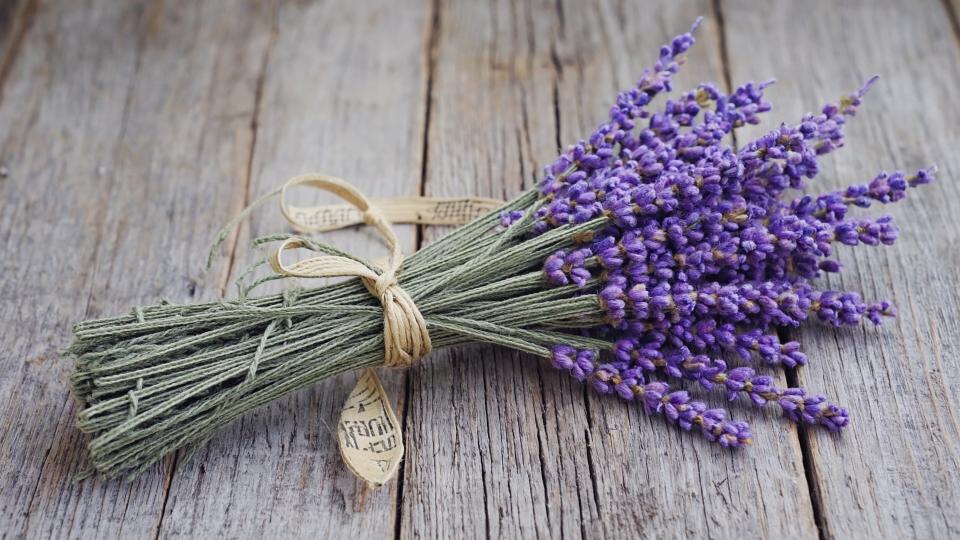
Crochet lavender bundles are one of the most atmospheric and rustic botanical crochet projects available, evoking the sun-drenched fields of Provence and the cottage garden abundance of English summer with nothing more than purple yarn, a small hook, and a length of natural twine or ribbon to bind the finished stems into a fragrant-looking bundle. The characteristic spike flower form of lavender is achieved through a deceptively simple sequence of small chain loops and slip stitches worked along the upper portion of a wire-reinforced stem, creating a textured, dimensional flower head that captures the essential quality of the plant with remarkable economy of technique.
Working the lavender stems over a length of florist’s wire before crocheting the outer covering gives each stem the flexibility and posability of a real cut flower, allowing the bundle to be arranged naturally with gently curved stems that fall into the organic, relaxed configuration of fresh-cut lavender. Make each bundle with between eight and fifteen stems of varying heights for the most convincing and generous result, using two or three slightly different shades of purple, from pale lilac through soft violet to deep amethyst, for a color variation that mimics the natural tonal range of a real lavender spike. Bind the finished stems tightly with natural twine or a simple linen ribbon bow for a finished bundle of enduring rustic beauty.
5. Crochet Daisy Chain Garland
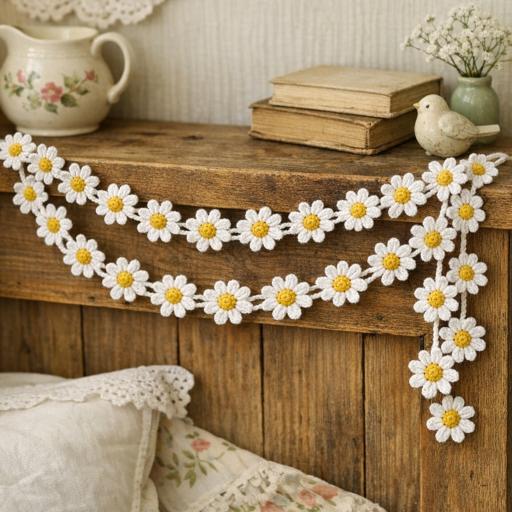
A crochet daisy chain garland is one of the most whimsical and joyful botanical crochet projects you can make, translating the childhood pleasure of threading real daisies into chains into a permanent, enduring decoration that can be draped over headboards, wound around bannisters, strung across shelves, or hung as a backdrop for celebrations and photography with effortless charm. The individual daisy motifs are among the quickest and most satisfying crochet flowers to make, each one requiring only minutes to complete in a simple pattern of white petals surrounding a bright yellow center, and the cumulative effect of many daisies linked into a generous garland is one of extraordinary lightness and happiness.
Each daisy in the garland is worked as a flat, six or eight petal motif from a center magic ring, with the petals formed from simple chain and slip stitch sequences that create a crisp, defined petal form in the characteristic white of a classic daisy. The bright yellow center, worked in several rounds of single crochet over the magic ring, provides the color contrast and visual anchor that makes each motif immediately recognizable. Link individual daisies together by joining the tip of one petal of each new daisy to the tip of a petal on the previous daisy as you work, creating a continuous garland that grows naturally and organically one flower at a time in a process as pleasurable as the resulting decoration is beautiful.
6. Crochet Monstera Leaf
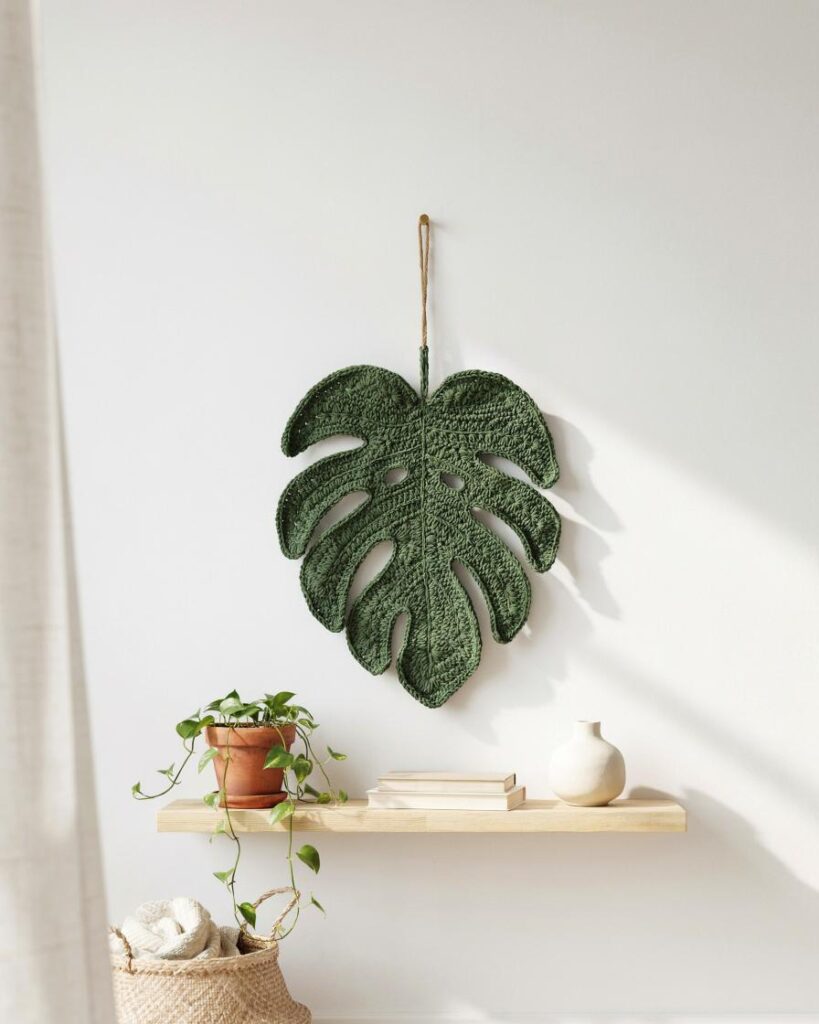
A crochet monstera leaf is one of the most architecturally striking and contemporary botanical crochet projects available, translating the iconic split-leaf form of the most popular houseplant of the current decade into a large-scale textile artwork that makes a genuine design statement as home decor. The challenge and satisfaction of this project lies in replicating the characteristic fenestrations, the holes and splits that give the monstera its distinctive silhouette, through a combination of careful shaping and deliberate gap-leaving techniques that create an accurate and convincing leaf form in two-dimensional crochet. On Pinterest, crochet monstera leaf patterns are among the most searched and saved botanical crochet projects.
Work the monstera leaf from the stem upward through the center vein, using increases on either side to build out the broad leaf width and then working individual leaf lobes separately, each with its own shaping sequence of increases at the tip and decreases along the sides, before joining them back to the central vein structure. The characteristic holes within the leaf are created by working chain spaces at the appropriate positions within each lobe that are then passed over on subsequent rows to create genuine openings in the fabric surface rather than applied decorations. Block the finished leaf firmly over a leaf-shaped template to achieve the flat, smooth surface that best shows off the intricate shaping work, and display mounted on a simple background for a botanical artwork of real sophistication.
7. Crochet Peony Bouquet
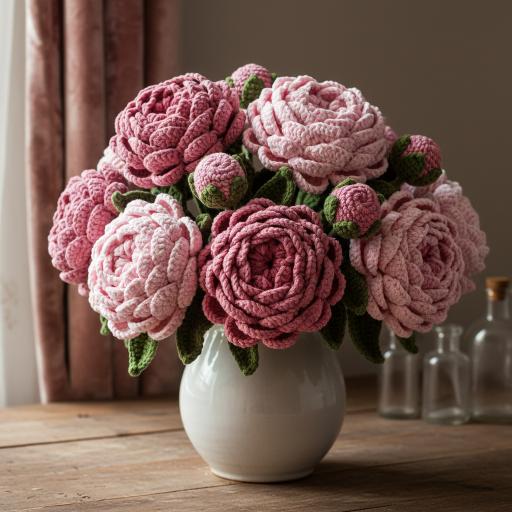
A crochet peony bouquet is the most romantically lush and abundantly petalled of all botanical crochet projects, and the extraordinary fullness and ruffled complexity of a finished crochet peony bloom makes it one of the most impressive and desired patterns in the entire fiber arts community. The characteristic overflowing fullness of a peony, with its seemingly impossible number of overlapping, ruffled petals packed into a generous, globe-shaped bloom, is achieved in crochet through a technique of working multiple rounds of petals in decreasing sizes, each round attached to the round beneath it and allowed to ruffle and overlap freely, creating a flower of genuine opulence and beauty.
Work the peony from the outermost petal layer inward, making the largest, most ruffled outer petals first and then progressively smaller, tighter inner petals in slightly deeper or more saturated tones of your chosen color to create the natural color depth that real peonies display within their center. Blush pink, soft coral, warm white, and deep rose are the most popular and Pinterest-beloved color choices for crochet peonies, and combining two or three tonal shades within a single bloom creates a dimensional, painterly quality that makes the finished flower truly extraordinary. Assemble three to five completed blooms with generous crocheted foliage into a bouquet arrangement, securing the wire stems together with floral tape for a finished display of exceptional beauty and presence.
8. Crochet Cactus Collection
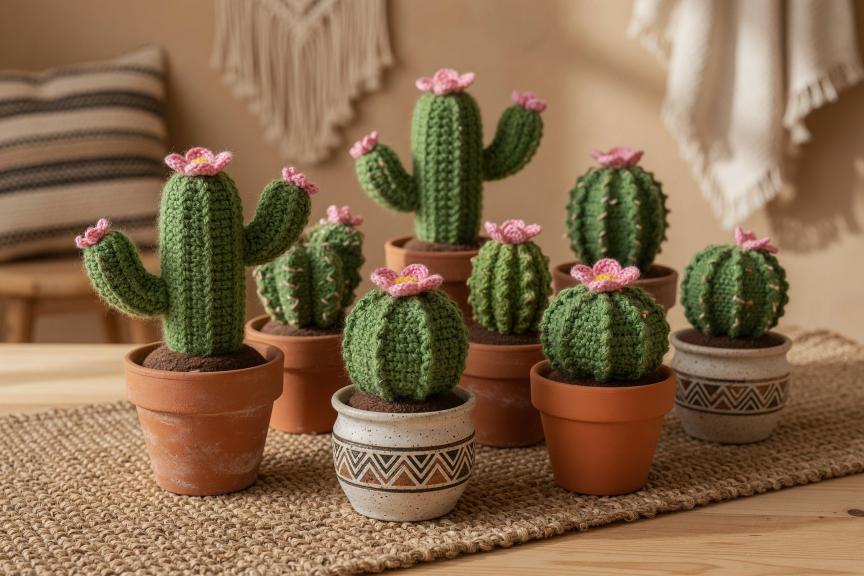
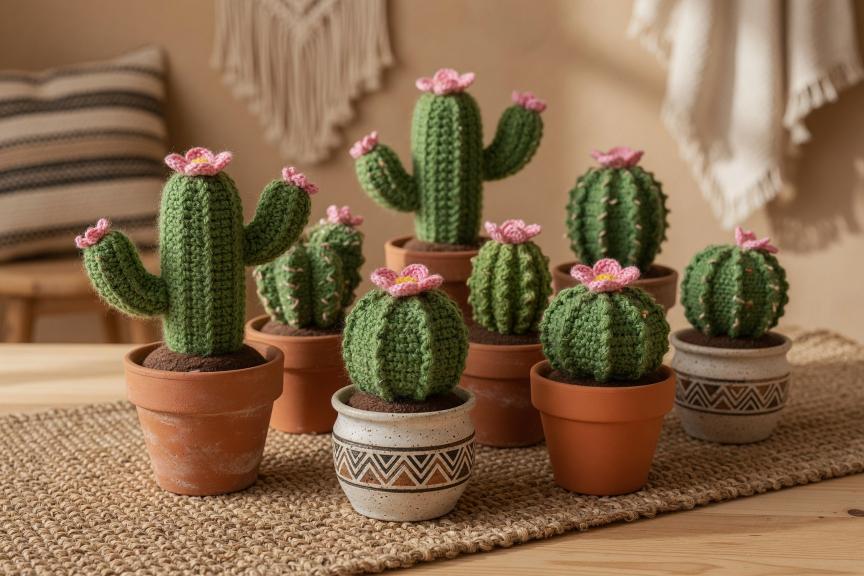
A crochet cactus collection is one of the most characterful and low-maintenance botanical crochet projects available, producing a desktop or windowsill display of plump, textured miniature cacti that require absolutely no watering, no specific light conditions, and no concern about the central heating air being too dry, making them the perfect plant alternative for anyone who loves the desert aesthetic but struggles to keep real cacti alive. On Pinterest, crochet cactus patterns have accumulated millions of saves and an enormous community of enthusiastic makers who share their finished collections in a wonderful variety of yarn colors, sizes, and pot styles.
The most satisfying crochet cactus collections combine several different cactus forms in varying sizes to create an interesting and varied grouping that mimics the diversity of a real desert plant collection. A tall columnar cactus with a simple cylinder construction and surface ridges created through alternating front and back post stitches, a round barrel cactus worked in a sphere construction with spiral ribbing, and a wide paddle cactus made from several flat oval sections joined together all contribute distinct silhouettes to the collection. Add tiny crocheted flowers in pink, yellow, or red at the tops of your finished cacti for a charming seasonal blooming detail, and plant each one in a small terracotta or painted ceramic pot filled with air-dry clay or sand for a grounded, finished display.
9. Crochet Wildflower Meadow Basket
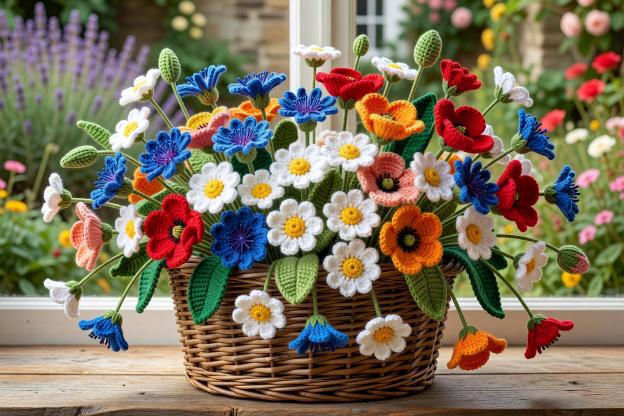
A crochet wildflower meadow basket is one of the most abundantly joyful and color-rich botanical crochet projects you can make, filling a simple wicker or ceramic vessel with a generous, overflowing collection of miniature wildflowers in the complete range of meadow colors to create a display that brings the spirit of a summer wildflower field permanently into the home. The beauty of this project lies in its creative freedom, as there is no fixed recipe or exact flower count, and the most beautiful wildflower baskets on Pinterest are those that reflect the maker’s own color instincts and flower preferences in a personal, spontaneous composition.
Build your wildflower collection over multiple crochet sessions, making flowers of many different types including simple five-petal forget-me-nots, spiky cornflowers with their characteristic fringed petals, bold open-faced poppies in scarlet or orange, cheerful white daisies with yellow centers, and tiny star-shaped stitchwort flowers in pure white. Work each flower on a wire stem wrapped in green floral tape or green yarn, which allows the stems to be bent and positioned naturally within the basket arrangement. Arrange the finished flowers in a vessel filled with florist’s foam to hold all stems securely, mixing heights and colors freely and tucking crocheted leaves and grass blades between the flowers to fill the arrangement and give it the lush, abundant quality of a real picked wildflower bunch.
10. Crochet Lotus Flower
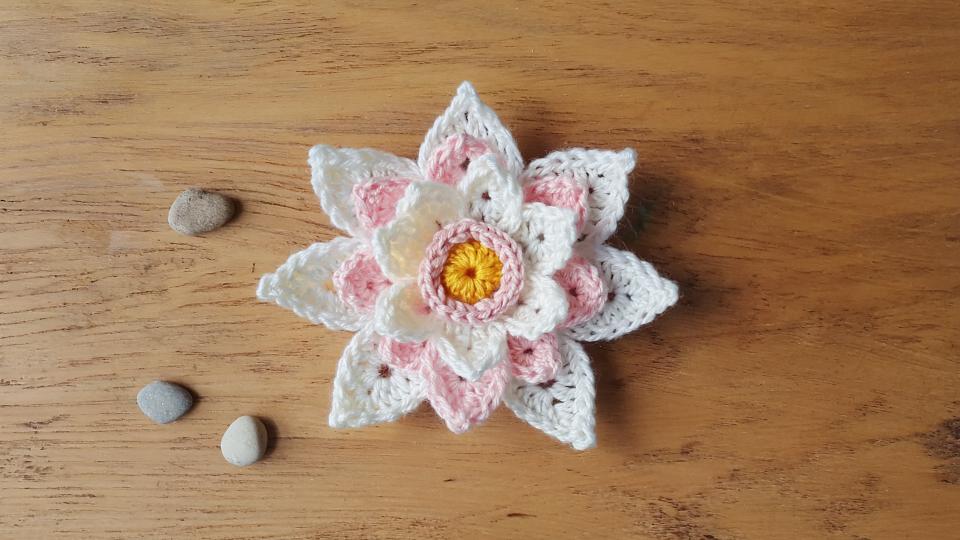
A crochet lotus flower is one of the most serene and spiritually resonant botanical crochet projects available, and its multi-layered petal construction and association with mindfulness, purity, and Eastern aesthetic traditions makes it a particularly meaningful project for makers who approach their craft as a meditative practice. The lotus form in crochet is achieved through multiple separate rounds of petals worked in graduating sizes and assembled from the center outward, with each petal round overlapping the one beneath it in the characteristic way that a real lotus bloom opens from its tight bud into a fully revealed flower of extraordinary geometric beauty.
Work the innermost petal round first in the palest tone of your chosen color, a barely-there blush pink or soft cream, then progress outward through rounds of gradually larger petals in progressively deeper shades that deepen from pale at the center to a richer, more saturated tone at the outer edge. This gradient color progression mimics the natural coloring of a real lotus bloom with beautiful accuracy and gives the finished crochet flower a depth and sophistication that a single-color construction cannot achieve. The finished lotus makes an extraordinarily beautiful decorative object displayed on a simple wooden surface alongside smooth pebbles, and the construction process itself, working round after round of petals in meditative repetition, is one of the most calming and centering crochet experiences available.
11. Crochet Tulip Bunch
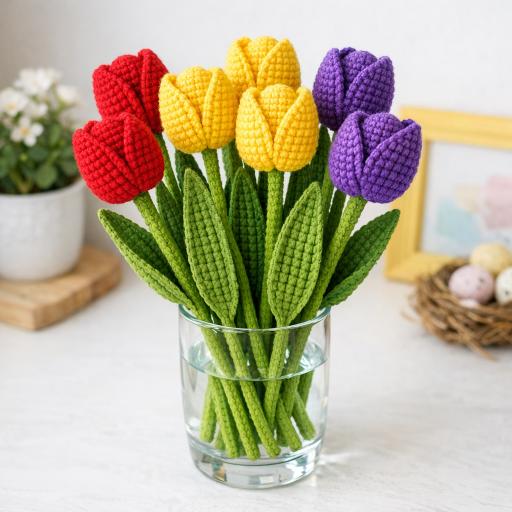
A crochet tulip bunch is one of the most structurally elegant and color-saturated botanical crochet projects you can make, capturing the clean, cup-shaped perfection of a tulip bloom in a three-dimensional construction that stands beautifully upright on a wire stem and displays with all the cheerful spring energy of a real tulip arrangement. The tulip’s simple, six-petalled cup form is ideally suited to crochet construction, as the gentle increase and decrease shaping required to create the characteristic ovoid bloom is accessible even to relatively new crochet makers while producing results of genuine botanical accuracy and beauty.
Work each tulip cup in a continuous round construction, starting with a small magic ring and increasing through the rounds to create the widening base of the bloom before decreasing again toward the open top to form the characteristic cup shape with its slightly flared rim. The six petals are defined through the round construction rather than worked separately, using a combination of different stitch heights within each round to create the subtle petal separation that gives the bloom its recognizable tulip silhouette. Mount each finished bloom on a wire stem wrapped in green yarn, add two long, strap-like crocheted leaves per stem in the characteristic upright tulip leaf form, and arrange a bunch of seven to nine stems in a simple glass or ceramic vase for a finished display of clean, graphic spring beauty.
12. Crochet Hanging Plant in Macramé Hanger
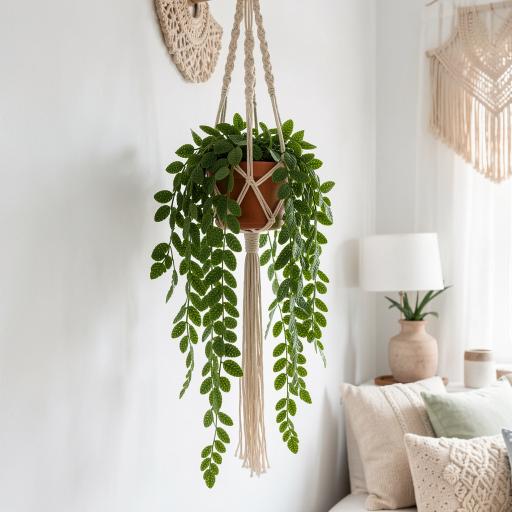
A crochet hanging plant displayed in a macramé hanger is one of the most perfectly Pinterest-aligned botanical crochet projects available, combining two of the most beloved fiber craft traditions into a single decorative object that captures the trailing, cascading quality of a real hanging plant with extraordinary charm. The project lends itself to making a string of hearts plant, a pothos with its heart-shaped leaves, or a cascading tradescantia with its long, trailing stems of small oval leaves, each of which translates naturally into a crochet construction that hangs and moves with a convincing, organic quality when suspended from a macramé hanger.
Work the trailing stems from the pot outward, making each leaf individually and attaching it to the growing stem at regular intervals to create the characteristic alternating leaf arrangement of most trailing houseplants. Use a slightly varied green, mixing a bright grass green with deeper forest tones and perhaps a touch of variegated yarn for the leaf color variation that real trailing plants display so beautifully. Fill a small crocheted or purchased pot with air-dry clay to anchor the stems before placing in your macramé hanger, and hang at a height that allows the longest trailing stems to cascade freely and show their full length. The finished piece makes an extraordinary focal point for a reading corner, bedroom wall, or any space that would benefit from a touch of trailing botanical life.
13. Crochet Cherry Blossom Branch
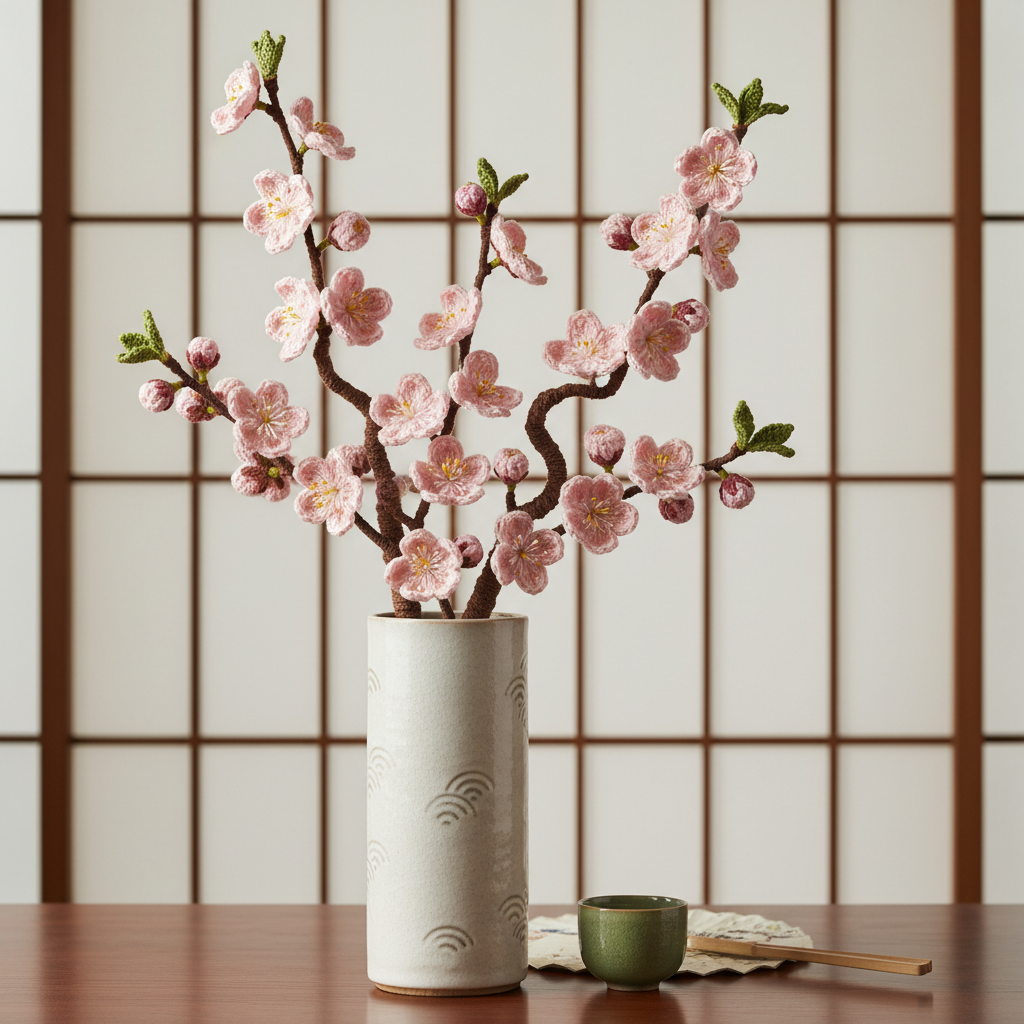
A crochet cherry blossom branch is one of the most delicate and culturally resonant botanical crochet projects available, capturing the ephemeral beauty of sakura season in a permanent textile form that can be displayed and appreciated throughout the year rather than for the brief two weeks of actual cherry blossom flowering. The combination of a realistic twisted wire branch structure, covered in brown yarn to create a convincingly woody appearance, with dozens of tiny five-petaled pink blossoms and small green buds in various stages of opening, creates a display piece of genuine beauty and botanical authenticity that is one of the most admired botanical crochet projects on Pinterest.
Construct the branch framework from heavy-gauge florist’s wire twisted together and then covered with tightly worked brown yarn in a technique that simultaneously creates the yarn covering and builds the branch structure through the way the yarn wraps and angles at each junction point. Work the individual cherry blossom flowers in the smallest possible scale using fine cotton thread on a tiny hook, making each five-petaled flower with a pale pink petal round and a small cluster of yellow stamens at the center worked in French knot embroidery on the finished flower. The contrast between the crinkled, organic branch texture and the perfect miniature precision of each tiny blossom creates a piece of botanical art of extraordinary refinement.
14. Crochet Tropical Leaf Wall Art
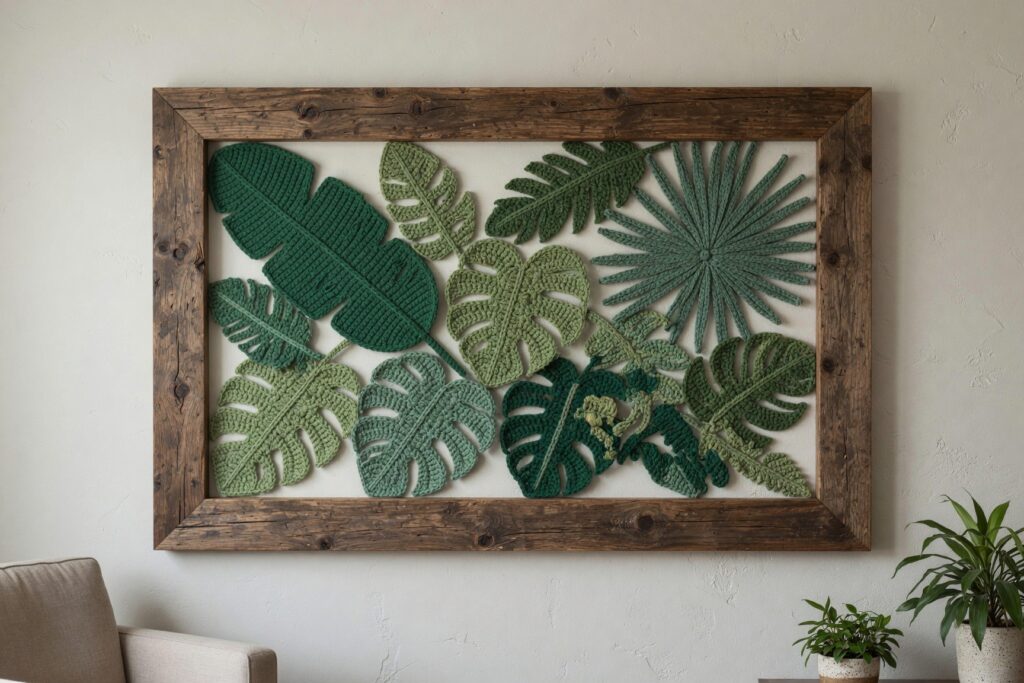
Crochet tropical leaf wall art is one of the most design-forward and interior-relevant applications of botanical crochet, translating the lush, oversized leaf forms of tropical plants into large-scale textile artworks that make a genuine design statement on any wall. The combination of different tropical leaf forms, a broad banana leaf with its characteristic central rib and parallel veining, a deeply lobed monstera, a fan-shaped palm frond, and a long, strap-like bird of paradise leaf, in varying shades of green from pale lime through rich emerald to deep forest creates a composition of botanical richness and textural variety that functions as a sophisticated piece of wall art rather than simply a craft project.
Work each leaf form individually using the appropriate shaping technique for its specific botanical character, blocking each finished leaf firmly over a shaped template to achieve the flat, pressed quality of a botanical illustration while retaining the tactile texture of the yarn surface. Mount the finished leaves onto a simple wooden frame, a piece of driftwood, or a stretched canvas background using a combination of hand stitching and adhesive, arranging them in an overlapping, layered composition that creates depth and visual interest across the full surface of the artwork. Frame the completed piece behind glass for the most polished, gallery-quality finish, or display unframed for a more relaxed, contemporary textile art aesthetic.
15. Crochet Forget-Me-Not Wreath
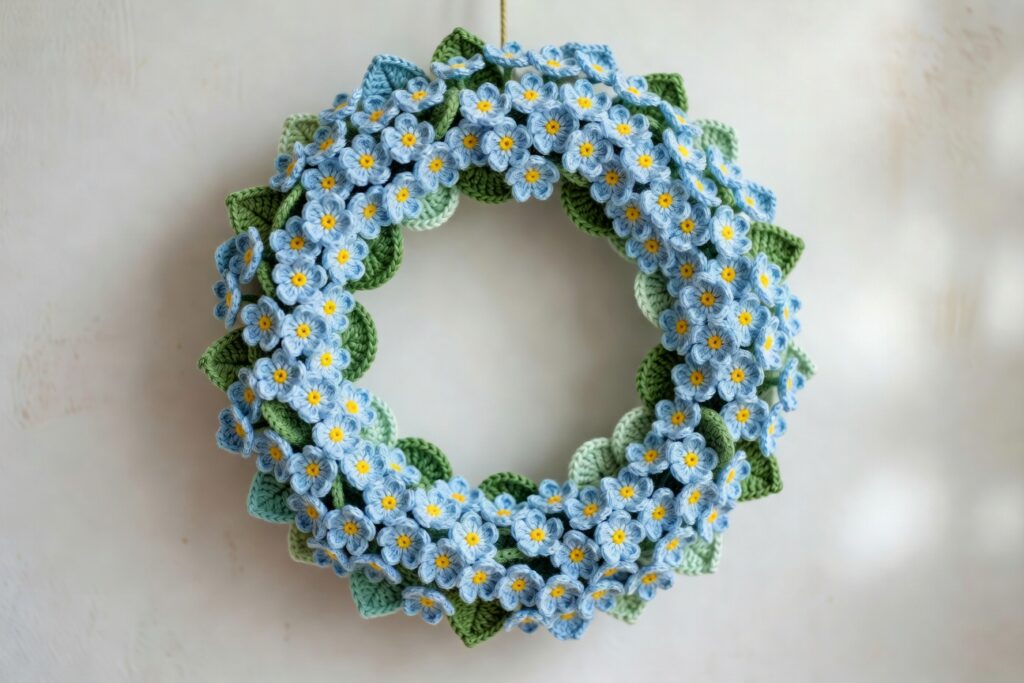
A crochet forget-me-not wreath is one of the most romantically delicate and labor-intensive botanical crochet projects available, requiring the patient construction of dozens of tiny five-petaled blue flowers that are then assembled with green foliage onto a circular frame to create a wall decoration of extraordinary charm and sentimental beauty. The forget-me-not holds a special place in the language of flowers as a symbol of enduring love and remembrance, giving a crochet wreath made from these tiny blooms a layer of emotional meaning that makes it a particularly meaningful gift for someone you wish to honor or remember, as well as a beautiful decorative object in its own right.
Each individual forget-me-not flower is worked at a very small scale using fine cotton thread in the characteristic clear, soft blue of the real flower, with five tiny rounded petals surrounding a small yellow center worked in a contrasting yarn. The miniature scale of each flower requires patience and a fine hook, but the repetitive, meditative rhythm of making many small flowers in quick succession is one of the most satisfying aspects of this project, and the accumulating collection of tiny blooms growing in your making basket creates a genuine sense of anticipation for the beautiful finished wreath that they will eventually become. Attach the flowers densely to a foam or wire wreath base with small crocheted leaves tucked between each bloom to fill any gaps and create the lush, abundant quality of the finished piece.
16. Crochet Mushroom and Toadstool Garden
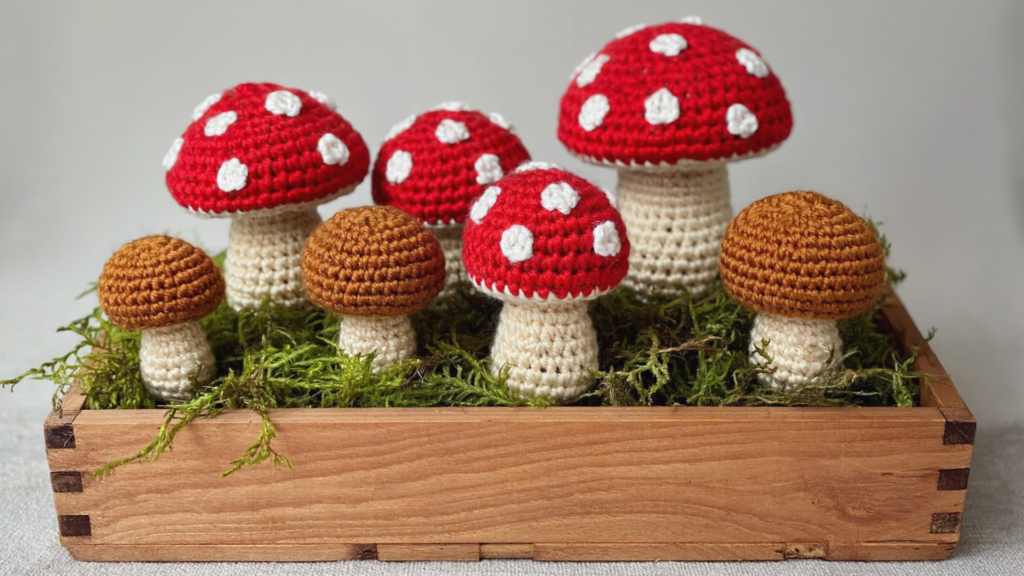
A crochet mushroom and toadstool garden is one of the most whimsical and enchanting botanical adjacent crochet projects available, combining the satisfying three-dimensional construction techniques of amigurumi with the natural charm of forest fungi to create a miniature woodland scene of extraordinary character and personality. The iconic red and white spotted fly agaric toadstool, with its domed scarlet cap and white spotted surface, is the star of any crochet mushroom collection and one of the most instantly recognizable and cheerful forms in the natural world, producing a finished crochet object of such concentrated charm that it consistently generates delighted responses from everyone who sees it.
Work each mushroom cap as a hemisphere construction starting from the flat base and increasing through the rounds to create the characteristic domed form, stuffing firmly with polyester fiberfill before closing to achieve a plump, rounded shape that holds its form beautifully. The white spots on a fly agaric cap can be added as small crocheted circles stitched onto the surface, as surface embroidery using white yarn, or as applied circles of white felt for the crispest, most graphic effect. Work the stem as a simple cylinder with a slight flare at the base for stability, stuff firmly, and join to the cap with mattress stitch before assembling your complete mushroom and toadstool collection in a small wooden box or ceramic dish filled with preserved moss for a finished forest floor scene of irresistible charm.
17. Crochet Dried Pampas Grass
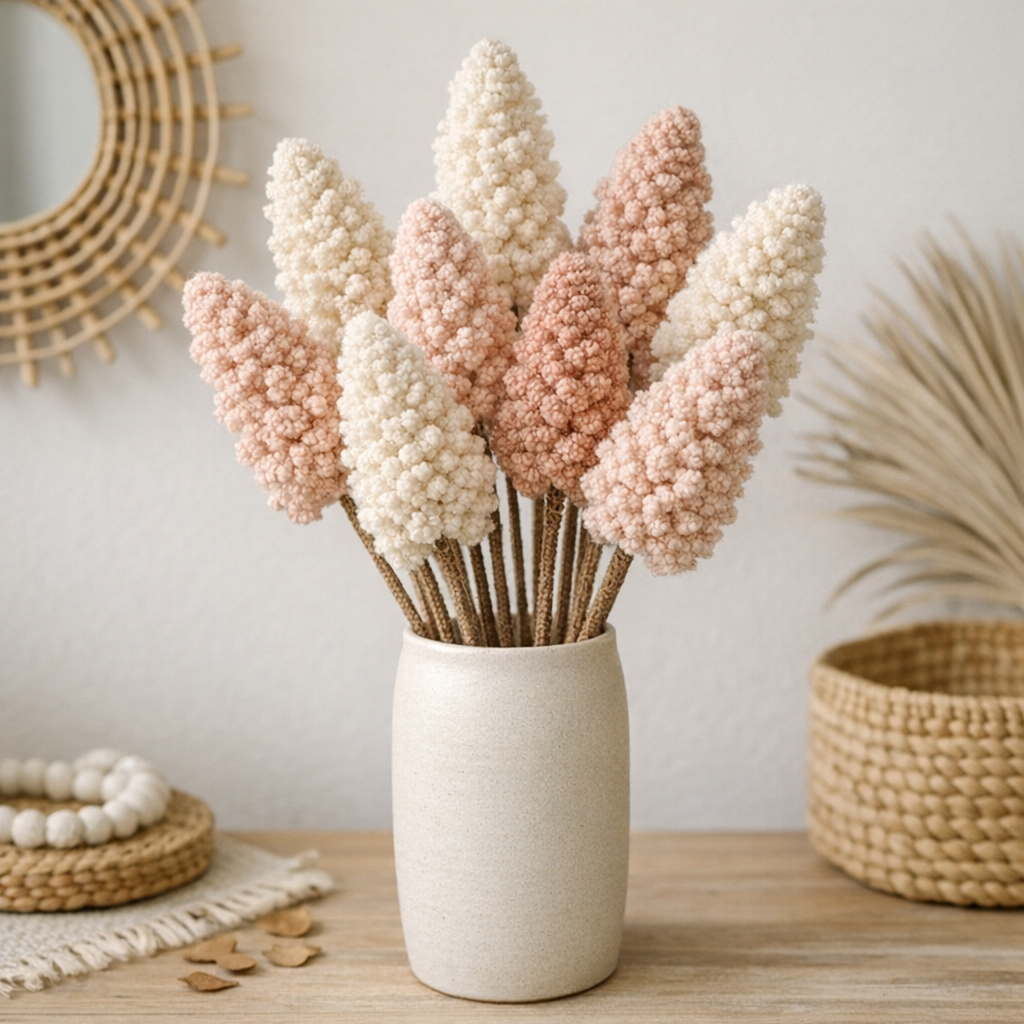
Crochet pampas grass is one of the most on-trend and interior-relevant botanical crochet projects of recent years, translating the feathery, plume-like form of the most popular dried botanical of the current decade into a permanent textile version that maintains its beautiful, fluffy silhouette indefinitely without shedding, fading, or requiring replacement. Real dried pampas grass, while undeniably beautiful, has a tendency to shed its feathery plumes over time and can trigger allergic responses in sensitive individuals, making a crochet alternative a genuinely practical as well as aesthetically beautiful choice for the many homes that love the pampas aesthetic but live with its real-world limitations.
The distinctive fluffy plume head of pampas grass is achieved in crochet through a technique of working loops of yarn that are then cut and brushed with a stiff bristle brush to separate and fluff the individual yarn fibers into a soft, feathery mass that genuinely mimics the texture of a real pampas plume with surprising fidelity. Work the plume base as a dense, elongated oval construction in a fine yarn, working many rows of loop stitches before cutting each loop and brushing vigorously until the surface transforms from a looped textile into a fluffy, cloud-like mass of individual fiber strands. Mount the finished plume on a tall wire stem wrapped in matching yarn, make three to five stems of varying heights, and display in a tall, simple ceramic vase for a boho-modern botanical arrangement of effortless beauty and permanent charm.