15 Glass Painting and Decoration Ideas to Try
1. Stained Glass Effect Window Panel
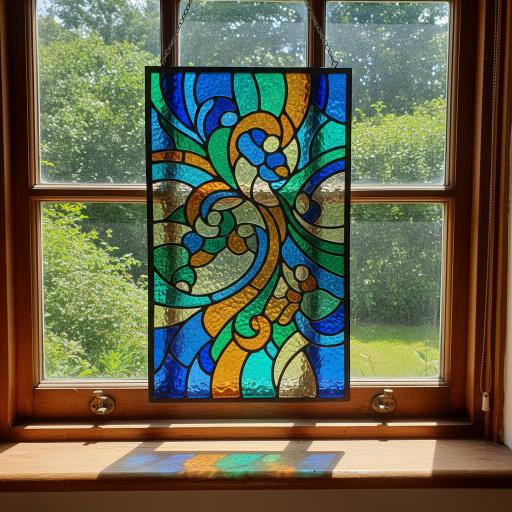
A stained glass effect window panel is the most dramatic and visually rewarding project in the entire world of glass painting, and its ability to transform ordinary window light into a cascade of jewel-toned color that shifts and glows throughout the day makes it one of the most consistently saved and shared DIY projects on Pinterest home decor boards. The technique of applying transparent glass paint within a framework of black outliner paste mimics the ancient craft of leaded stained glass with remarkable fidelity, creating results that appear genuinely professional and architectural at a fraction of the cost of authentic stained glass work.
To create a stained glass effect panel, begin by sketching your design on paper and taping it beneath a clean sheet of glass or a purchased glass panel as a tracing guide. Apply black glass outliner paste directly onto the glass surface following your design lines, allow it to cure completely for at least twenty-four hours, then flood each enclosed cell of your design with transparent glass paint in your chosen jewel tones using a fine brush or dropper. The transparent paint allows light to pass through and illuminate the color from within, creating the characteristic luminous glow of stained glass that makes this technique so enduringly beautiful and rewarding to practice.
2. Hand-Painted Wine Glasses
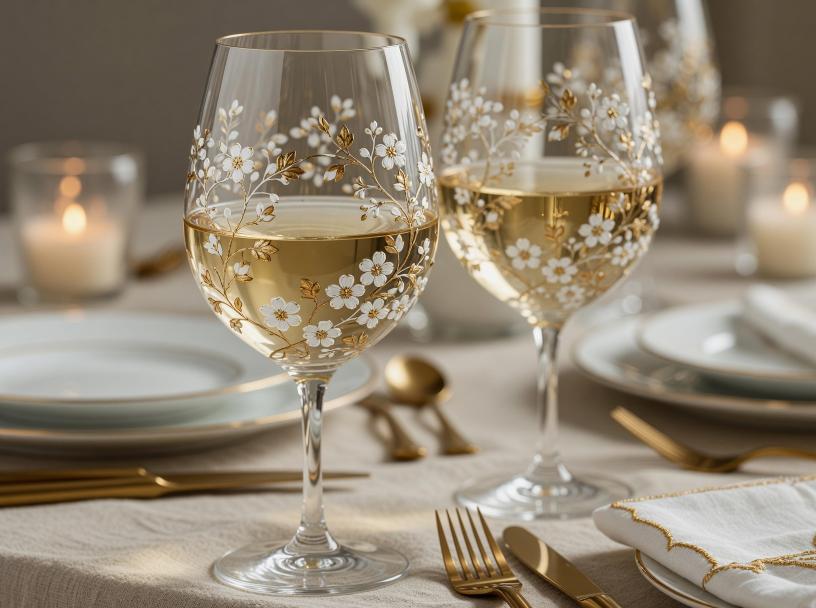
Hand-painted wine glasses are one of the most elegant and practical applications of glass painting, transforming an everyday household item into a personalised, artisan-quality piece that elevates any table setting from ordinary to genuinely special. The curved surface of a wine glass presents an interesting challenge for the painter that makes the finished result all the more impressive, and a set of beautifully hand-painted glasses is one of the most appreciated and commented-upon gifts you can bring to a dinner party or present as a wedding or housewarming gift. On Pinterest, hand-painted glassware consistently ranks among the most saved home entertaining and gift ideas.
The key to successful hand-painted wine glasses is choosing the right paint for the application and taking the time to cure it properly for durability. Enamel glass paints specifically formulated for glassware are the most appropriate choice, as they can be oven-cured to create a finish that withstands gentle hand washing without chipping or peeling. Apply your design to the exterior of the glass below the rim using fine detail brushes, working on a clean, grease-free surface that has been wiped with rubbing alcohol before painting begins. Simple botanical motifs, geometric patterns, and monogram initials are among the most popular and timeless design choices for painted wine glasses.
3. Mosaic Glass Vase
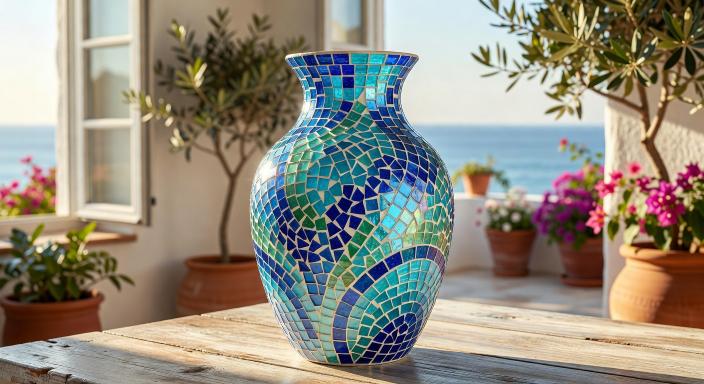
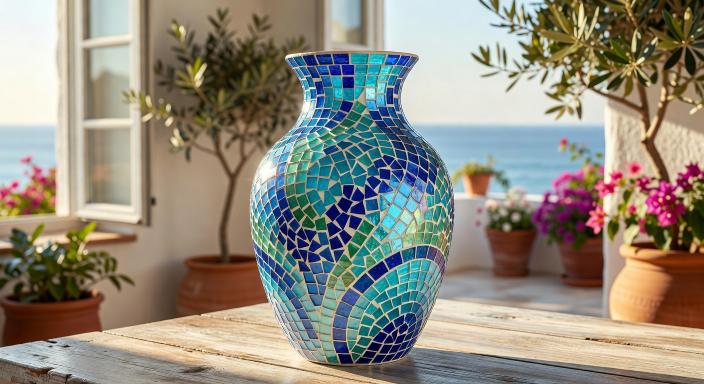
A mosaic glass vase is one of the most tactile and artistically satisfying glass decoration projects available, combining the ancient craft of mosaic with the modern accessibility of craft store glass tiles and adhesives to create a finished piece of genuine decorative beauty. The process of selecting, arranging, and adhering individual pieces of colored glass to a vase surface is deeply satisfying in its methodical, puzzle-like quality, and the finished result, with its fragmented, jewel-like surface that catches and refracts light from every angle, has a richness and complexity that painted surfaces alone cannot achieve.
To create a mosaic glass vase, begin with a plain glass or ceramic vase as your base and plan your color palette and pattern before beginning adhesion. Apply individual glass mosaic tiles, broken mirror pieces, or vitreous glass pieces using a strong waterproof tile adhesive, leaving consistent gaps between pieces for grouting. Once all tiles are adhered and the adhesive has cured completely, apply unsanded tile grout in white, gray, or a contrasting color, pressing it firmly into all the gaps between tiles and wiping away the excess with a damp sponge before it fully sets. The grouting stage transforms a collection of individual tiles into a unified, professional-looking mosaic surface.
4. Reverse Glass Painting
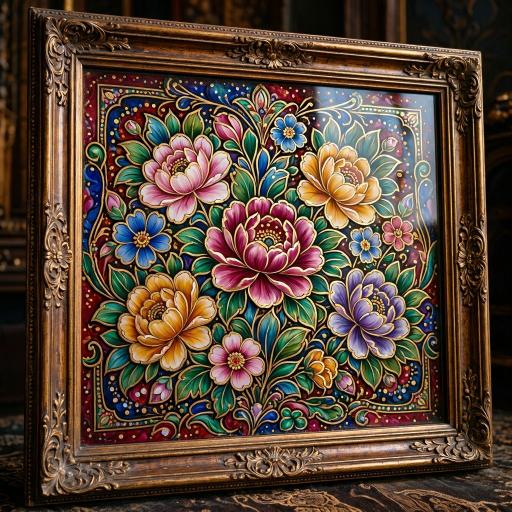
Reverse glass painting is one of the most fascinating and historically rich glass painting techniques, practiced across cultures from Chinese Qing Dynasty workshops to German folk art traditions to contemporary fine art studios, and its distinctive quality of painting on the back surface of glass so that the finished image is viewed through the glass from the front creates a luminous, jewel-like quality that no canvas or paper painting can replicate. The technique requires painting in reverse order from how you would approach a conventional painting, starting with the finest foreground details and building up to the background last, which demands a particular kind of spatial thinking that makes the process as intellectually engaging as it is visually rewarding.
The unique visual quality of a reverse glass painting comes from the glass itself acting as a natural varnish layer over the paint, giving the colors a depth, saturation, and luminosity that makes them appear to glow from within. Begin by sketching your design on paper and taping it beneath the glass as a guide, then apply the finest details of your composition first using a fine brush, allowing each layer to dry completely before adding the next. Outline details come first, then mid-tones and shadows, and finally the background colors that will appear behind everything else when the painting is turned over and viewed correctly from the front through the glass surface.
5. Frosted Glass Jar Candle Holders
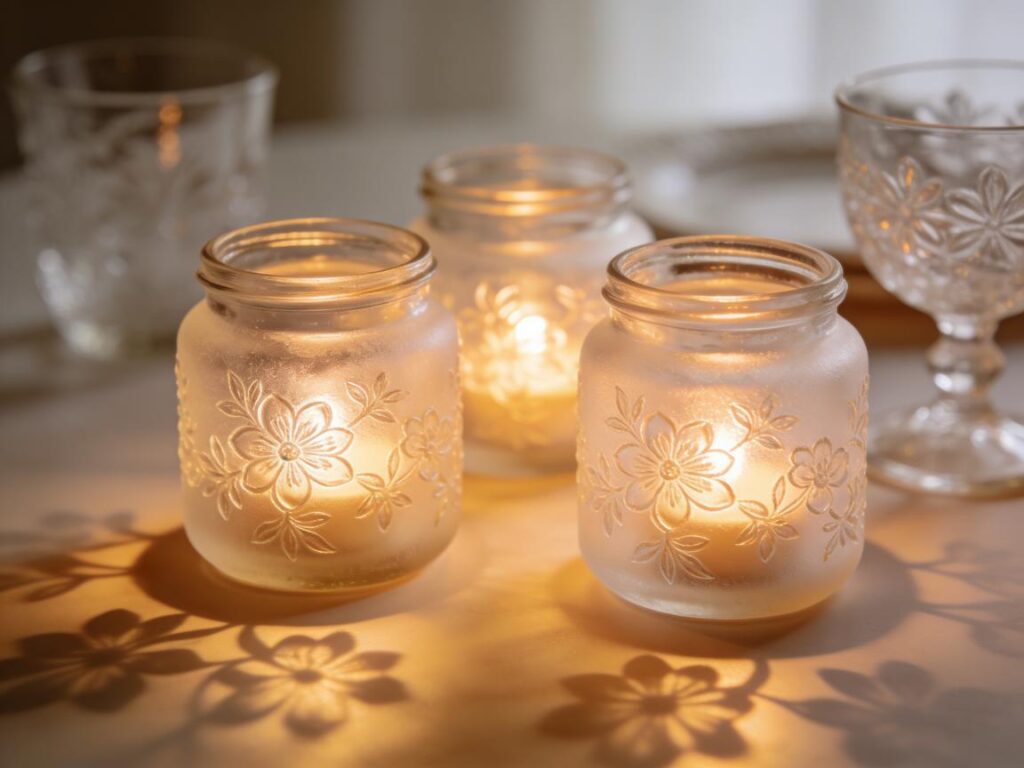
Frosted glass jar candle holders are one of the most atmospheric and elegant glass decoration projects you can undertake at home, transforming plain glass jars into sophisticated candlelight vessels that cast a soft, diffused glow through their frosted surface and create an ambiance of warmth and romance that clear glass alone cannot achieve. The frosting technique, achieved either through etching cream or frosted glass spray paint, is accessible to crafters of all experience levels and produces results that look far more professional and considered than the simple process that created them would suggest.
Frosted etching cream offers the most precise and permanent frosting results, allowing you to apply adhesive vinyl stencils to the glass surface, brush etching cream over the exposed areas, and remove the stencil after the specified time to reveal crisp, permanent frosted designs against the clear glass. This technique is ideal for adding botanical motifs, geometric patterns, or monogram letters to the surface of jar candle holders with a precision and consistency that spray frosting cannot match. Place a pillar candle or tea light inside the finished holder and observe how the candlelight illuminates the frosted design from within, creating a beautifully soft, patterned glow.
6. Painted Glass Terrarium
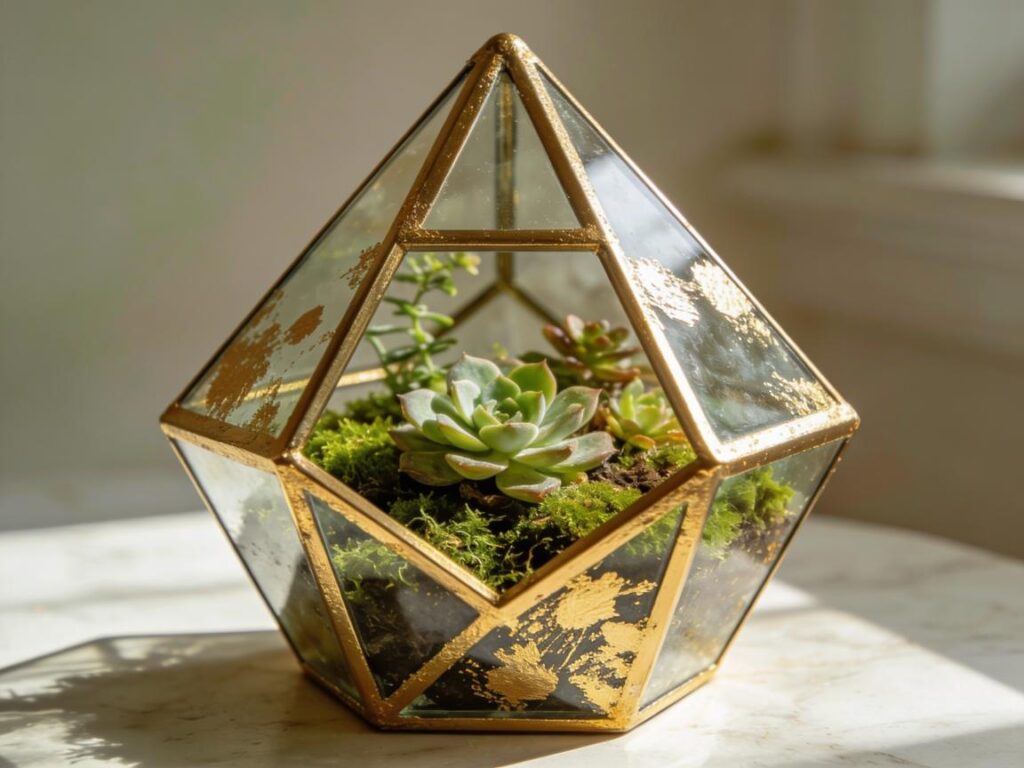
A painted glass terrarium is one of the most on-trend and Pinterest-popular glass decoration projects of recent years, combining the botanical appeal of a miniature planted landscape with the decorative impact of painted glass details to create a living home accessory of genuine beauty and sophistication. Geometric glass terrariums with their clean angular frames provide the perfect surface for metallic paint accents, and the combination of warm gold or copper paint against the cool transparency of glass and the organic green of living plants creates a visual harmony that feels both modern and natural simultaneously.
The most effective decorative approach for a painted glass terrarium is restraint, using metallic paint to highlight the geometric edges and frame elements of the terrarium structure rather than covering large areas of the glass surface that would obscure the planted interior. Apply gold or copper leaf paint carefully to the metal frame and edge elements using a fine brush, then allow to dry completely before adding your planting. Fill the base of the terrarium with a layer of small pebbles for drainage, followed by activated charcoal and then a well-draining cactus or succulent compost mix, before planting your chosen miniature plants and finishing with decorative moss, sand, or small stones across the surface.
7. Glass Pebble Magnets
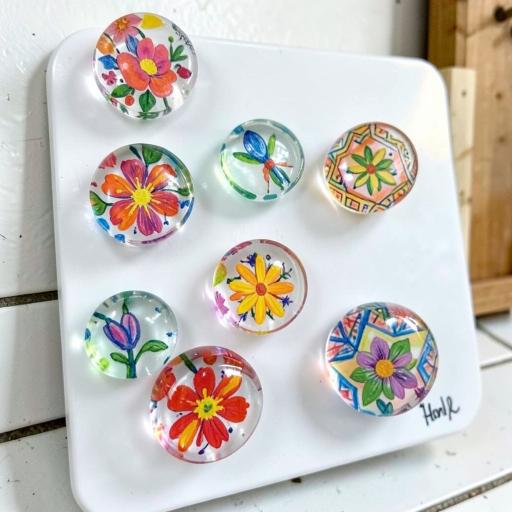
Glass pebble magnets are one of the most satisfying quick-craft glass decoration projects available, producing a collection of beautiful, jewel-like finished objects in a single crafting session that makes an impressive display on any magnetic board or refrigerator door. The technique exploits the natural magnifying and color-intensifying quality of flat glass pebbles, which concentrate and deepen the colors of whatever is placed beneath them to create a richness and luminosity far beyond what the original paper or paint source would display on its own. On Pinterest, glass pebble craft projects have a huge and enthusiastic following for exactly this reason.
To make glass pebble magnets, paint small designs on the flat back of clear glass pebbles using acrylic paint or nail polish, or alternatively cut tiny images, patterns, or botanical illustrations from decorative paper and adhere them to the flat side of the pebble using decoupage medium. Apply a final coat of decoupage medium over the paper or paint to seal and protect the design, allow to cure completely, then attach a strong neodymium magnet to the flat back of each finished pebble using a powerful adhesive. The curved front surface of the glass pebble acts as a natural lens that magnifies and beautifies whatever is beneath it, creating a finished magnet of surprising visual richness.
8. Hand-Painted Glass Ornaments
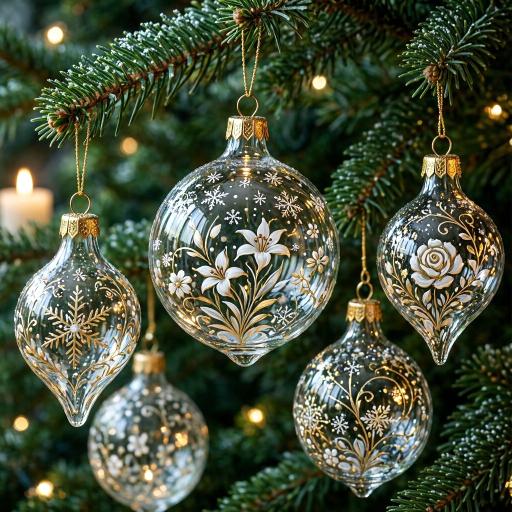
Hand-painted glass ornaments are among the most rewarding and cherished glass painting projects of the entire year, and the finished results, whether destined for a Christmas tree, a year-round decorative display, or a gift to a loved one, have a fragile, precious quality that mass-produced ornaments can never match. Clear glass ball ornaments provide the perfect spherical canvas for painted designs, and their transparent surface allows any light source nearby to illuminate the painted design from within, creating a glowing, luminous effect that is particularly magical when the ornament is hanging near the warm light of a Christmas tree.
The most effective approach to painting glass ornaments is to remove the metal cap, pour a small amount of glass paint in your chosen color into the interior of the ball, swirl gently to coat the inside surface, then pour out any excess and allow to dry upside down over a glass or cup. This internal painting technique creates a beautifully even, glowing base color that illuminates the ornament from within. Additional exterior details in metallic paint, fine painted patterns, or glitter applied over a coat of decoupage medium can then be added to the outside surface to build up a finished design of layered beauty and depth.
9. Stencilled Glass Bottles
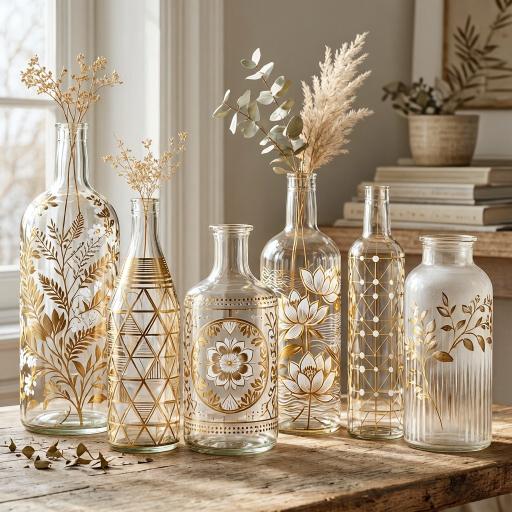
Stencilled glass bottles are one of the most accessible and immediately gratifying glass decoration projects for beginners, delivering professional-looking results through the simple application of adhesive stencils and paint that require no particular artistic skill or experience to achieve. A collection of stencilled glass bottles in varying heights and shapes, decorated with coordinating patterns in a consistent color palette, creates a beautiful styled vase grouping that looks genuinely designed and considered when displayed together on a shelf, windowsill, or dining table.
Clean glass bottles thoroughly with rubbing alcohol to remove any grease or residue that would prevent paint or stencil adhesive from bonding properly, then apply your chosen adhesive stencil firmly to the dry glass surface, pressing all edges down carefully to prevent paint bleeding beneath the stencil edge. Apply glass enamel paint over the stencil opening using a dense foam dauber or stencil brush, using a stippling or pouncing motion rather than brushing sideways which can push paint under the stencil edge. Remove the stencil carefully while the paint is still slightly wet for the cleanest edge, and allow the finished design to cure according to the paint manufacturer’s instructions before handling.
10. Glass Painting on Mirrors
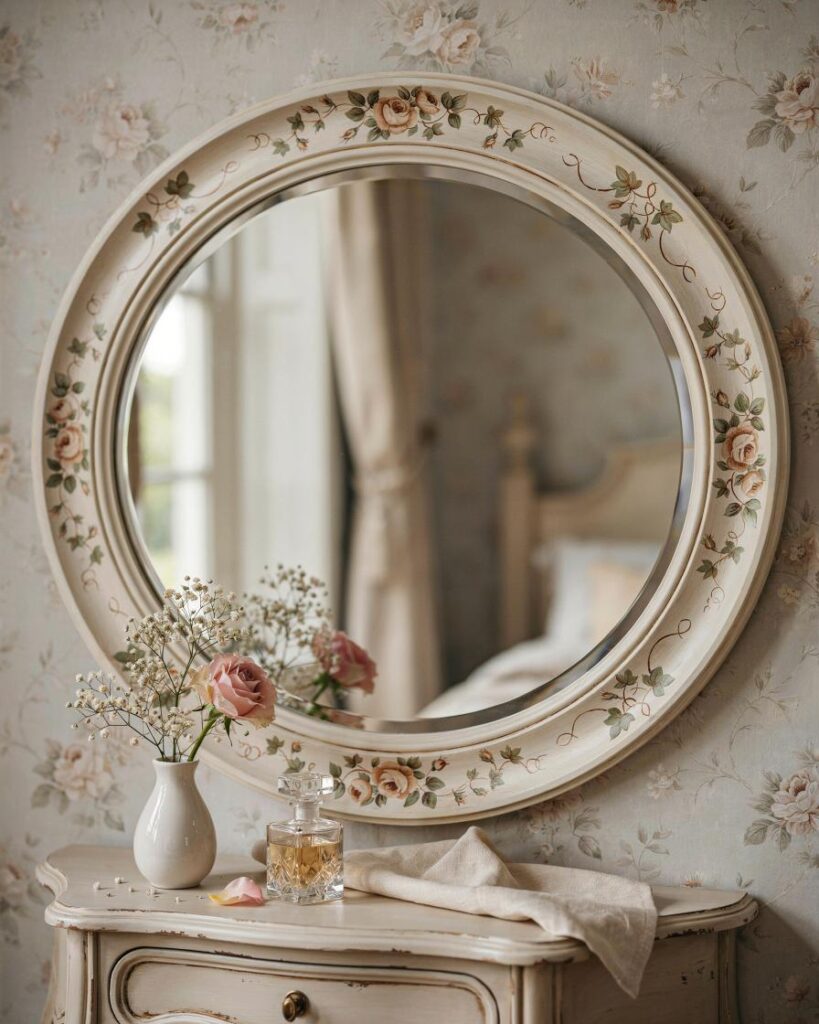
Painting on the surface of mirrors is one of the most glamorous and high-impact glass decoration techniques available, combining the practical functionality of a mirror with the decorative richness of hand-painted artwork to create a piece that is simultaneously useful and genuinely beautiful as a standalone decorative object. The reflective quality of the mirror surface adds a dimension to painted glass decoration that flat glass cannot offer, with the mirror both reflecting light back through the painted design from behind and doubling the visual impact of metallic and transparent paint colors in a way that makes them appear far more brilliant and luminous than they would on any other surface.
The most popular approach for painted mirror decoration is to work on the border and peripheral areas of the mirror surface while leaving the central reflective area clear for its primary function. Botanical garlands, geometric borders, trailing vines, and floral corner motifs in gold, white, and soft color all work beautifully on mirror surfaces and can be applied using fine detail brushes and enamel or acrylic glass paint. Clean the mirror surface thoroughly with glass cleaner and allow to dry completely before beginning to paint, as any residue or moisture on the surface will prevent the paint from adhering properly and result in peeling and flaking once the paint has dried.
11. Painted Glass Garden Lanterns
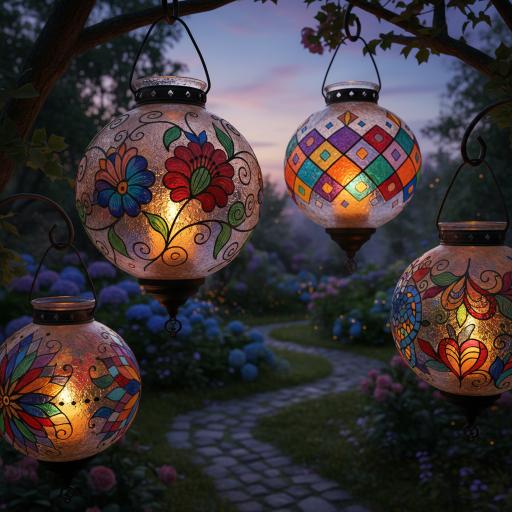
Painted glass garden lanterns are one of the most atmospheric and practically rewarding glass decoration projects you can undertake, creating outdoor lighting accessories of genuine beauty that transform a garden, patio, or balcony into an enchanting evening space. The combination of hand-painted glass designs and warm candlelight or LED light within creates a glowing, colored light effect that illuminates the surrounding area with shifting patterns of color and warmth, adding a magical quality to outdoor entertaining that no commercially produced lantern can quite replicate.
Choose glass lanterns with smooth, flat panel sides that provide the most accessible painting surface, and clean them thoroughly with rubbing alcohol before applying any paint. Transparent glass paints in jewel tones, cobalt blue, emerald green, amber, and ruby red, create the most dramatic and beautiful candlelight effects as they allow the warm glow of the light source to pass through and project their color outward into the surrounding space. Apply your designs freehand or using stencils depending on your confidence level, and finish with a coat of outdoor-rated clear varnish over the exterior painted surface to protect your work from the moisture and temperature changes of outdoor use.
12. Glass Tile Coaster Set
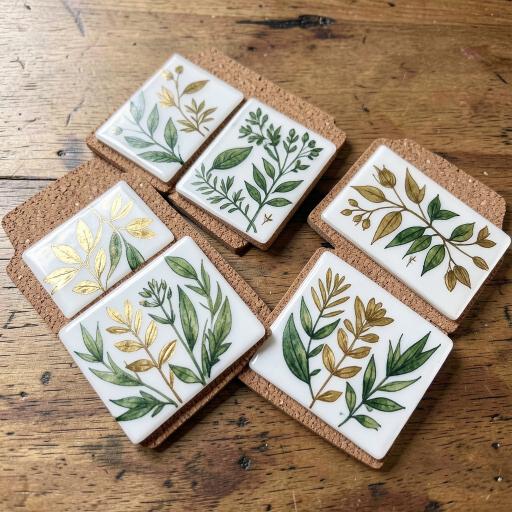
A hand-painted glass tile coaster set is one of the most practical and beautifully finished glass painting gifts you can make, combining the durability of glazed glass tiles with the personal artistry of hand-painted botanical or geometric designs to create a functional home accessory of genuine quality and beauty. Plain white glazed ceramic tiles make an ideal painting surface for this project, as their smooth, non-porous surface accepts glass and ceramic paints beautifully and their flat, rigid form is perfectly suited to the practical requirements of a coaster that must withstand the heat and moisture of hot and cold beverages.
Paint your chosen designs onto the smooth side of plain white glazed ceramic tiles using enamel or glass paint and fine detail brushes, working one tile at a time and allowing each to dry before handling. Botanical motifs such as individual leaves, simple flowers, herbs, and branches are among the most popular and timeless design choices for painted tile coasters, and a set of four to six tiles with related but slightly varied designs creates a cohesive collection that looks beautiful when displayed together. Once the paint has been oven-cured according to the manufacturer’s instructions, apply self-adhesive cork sheets to the back of each tile to protect surfaces from scratching and provide a non-slip base.
13. Painted Glass Sun Catchers
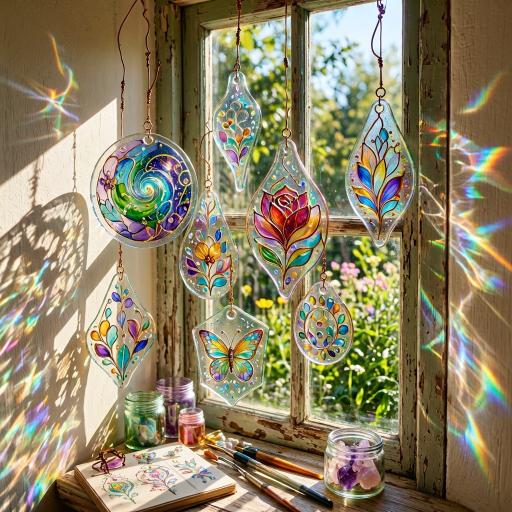
Painted glass sun catchers are among the most magical and light-responsive of all glass painting projects, creating hanging decorations that interact with sunlight in a constantly changing and endlessly beautiful way that makes them genuinely mesmerizing to observe throughout the day. As the angle and intensity of natural light shifts from morning to afternoon, a painted glass sun catcher transforms from a simple colored hanging into an active light source, casting pools and patterns of colored light across the walls, floor, and ceiling of any room in which it is displayed. This dynamic, light-interactive quality is what makes sun catchers one of the most beloved and Pinterest-popular glass painting projects of all.
Clear glass shapes, available in a huge variety of forms from simple circles and teardrops to elaborate botanical and geometric outlines, provide the ideal blank canvas for painted sun catchers. Apply transparent glass paint in your chosen colors using fine brushes or by flooding larger areas with paint and tilting the glass to create gradient blends, leaving some areas of clear glass unpainted to maximise the light-passing effect. Add fine details in black glass outliner paste for a stained glass aesthetic, attach a hanging loop of monofilament line through a small drilled hole or adhesive bail, and hang in a sunny window to observe the extraordinary light-casting effect of the finished piece.
14. Decorated Glass Photo Frames
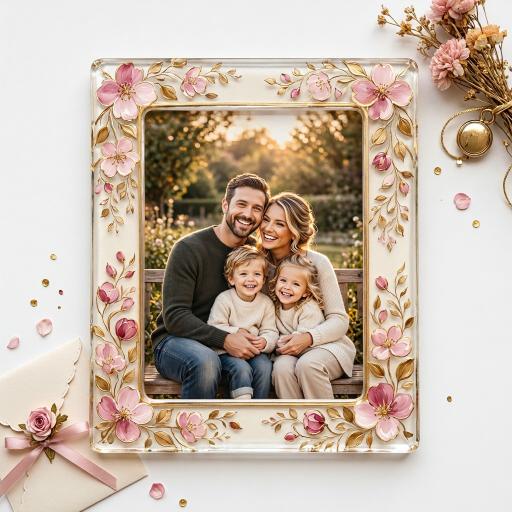
Decorating glass photo frames with hand-painted designs is one of the most personally meaningful glass painting projects available, transforming an ordinary photograph display into a bespoke, artisan-quality piece that celebrates both the image it contains and the skill and care that went into creating its decorated surround. The glass front panel of a photo frame provides an accessible, flat painting surface of a manageable size that is ideal for detailed botanical illustrations, geometric border patterns, or personalised motifs that make the frame as specific and special as the photograph it holds.
The most effective approach for painting photo frame glass is to work on the border area of the glass panel while leaving the central portion clear to display the photograph beneath without obstruction. Mark the central clear area lightly with a removable tape border before beginning to paint, then apply your chosen design to the surrounding border using fine glass or enamel paint and detail brushes of an appropriate size for the scale of your design. Remove the tape border once the paint is fully dry to reveal a clean, precise edge between the painted border and the clear viewing area, then reassemble the frame with your chosen photograph and finish with a hanging fixture or easel backing to complete the personalised gift.
15. Glass Painted Night Light
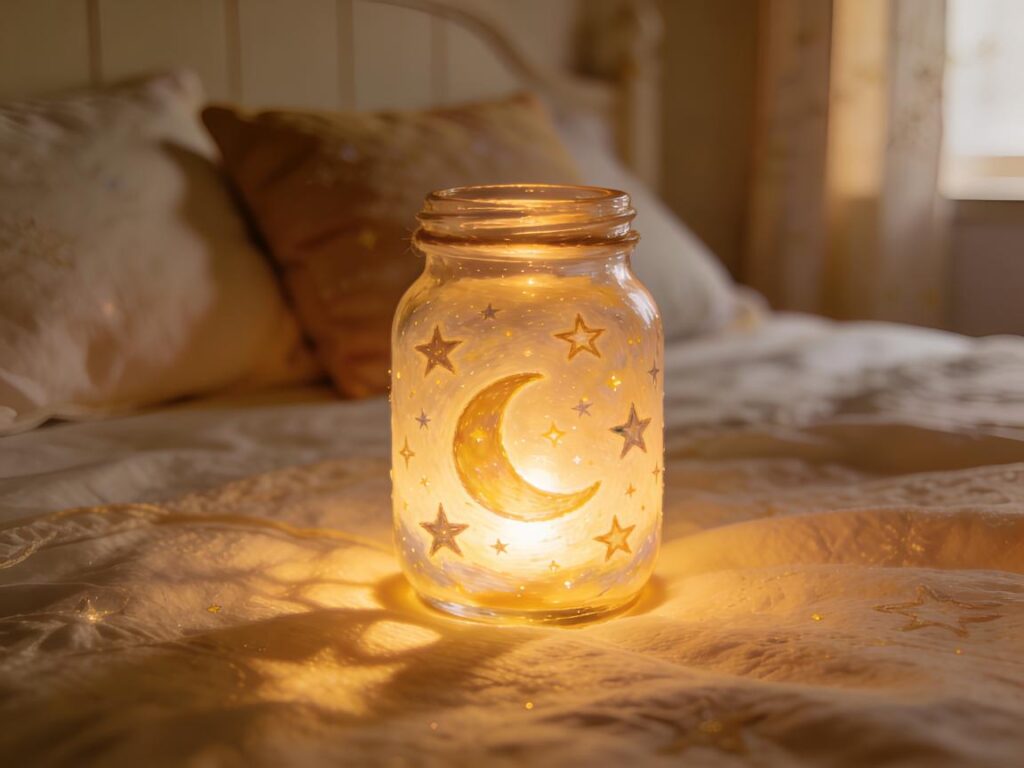
A hand-painted glass jar night light is one of the most enchanting and practically useful glass painting projects you can create, combining the gentle, diffused glow of an LED light source with hand-painted glass designs to produce a bedside or nursery light of genuine beauty and personal character. The painted glass surface softens and colors the light that passes through it, transforming a simple LED tea light or battery-operated fairy light into a warm, atmospheric glow that casts the colors and patterns of the painted design subtly across the surrounding surfaces, creating a magical effect that is particularly beloved in children’s bedrooms and cozy reading corners.
Select a clean glass jar of an appropriate size, from a small jam jar for a subtle, intimate effect to a large mason jar for a more dramatic light presence, and clean the surface thoroughly with rubbing alcohol before beginning to paint. Apply your chosen design, whether celestial stars and moons, botanical patterns, abstract color washes, or geometric shapes, using transparent glass paint that will allow the light to pass through and illuminate the colors from within. Place a battery-operated LED tea light or a small string of battery fairy lights inside the finished painted jar and observe how the warm light transforms the painted glass surface into a softly glowing, color-filled lantern of extraordinary charm and beauty.