15 Small Sofa vs Sectional Sofa Ideas for Any Space
1. The Classic Two-Seater Sofa for Compact Rooms
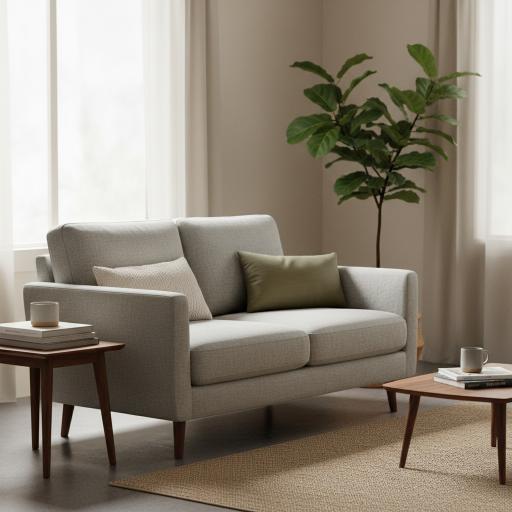
A classic two-seater sofa is the most space-conscious and versatile seating solution available for compact living rooms, studio apartments, and any space where floor area is genuinely limited and every square centimeter of clear floor space carries real value. The two-seater format, typically ranging from one hundred and forty to one hundred and seventy centimeters in width, provides comfortable seating for two people while leaving enough surrounding floor space for a coffee table, side tables, and a clear circulation path that keeps the room feeling open and navigable rather than cramped and obstructed. On Pinterest, compact two-seater sofas styled in minimal, thoughtfully arranged small living rooms consistently generate enormous engagement.
The design language of the sofa you choose for a compact room matters enormously, as a two-seater with visible legs, a slim profile, and a light upholstery fabric will occupy the same physical footprint as a bulkier alternative but appear to take up significantly less visual space in the room. Opt for a frame with tapered wooden or metal legs that allow the floor to remain visible beneath the sofa, choose upholstery in a warm neutral tone that recedes quietly into the room’s overall palette, and keep the cushion arrangement simple and uncluttered. A two-seater sofa that is well chosen for its space creates a complete, resolved living room composition that feels neither sparse nor overwhelming.
2. The L-Shaped Sectional for Open Plan Living
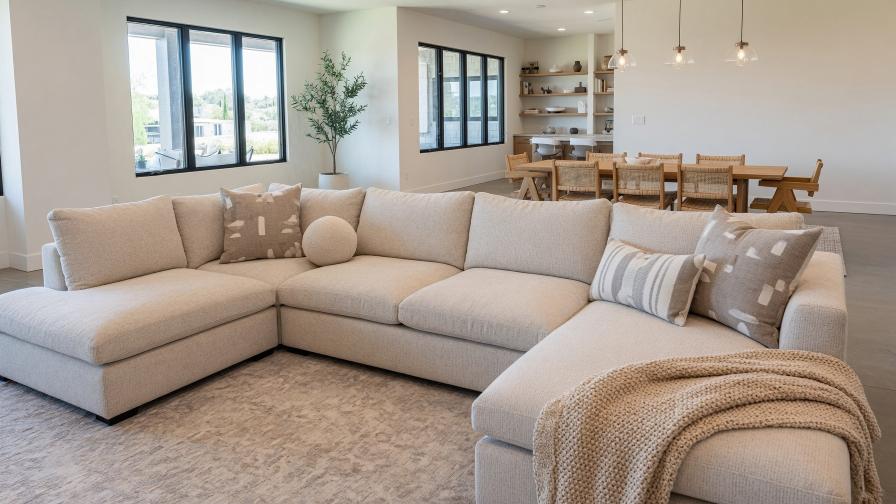
An L-shaped sectional sofa is the single most effective tool for defining and anchoring a living zone within an open-plan space, and its generous, wraparound form creates a clear sense of spatial territory and comfortable enclosure in a large, undivided floor plan that a smaller sofa cannot achieve with the same authority and conviction. The longer arm of the L runs parallel to one wall or faces the primary view into the room, while the shorter chaise section extends perpendicular to create a defined corner of seating that naturally organizes the surrounding furniture and establishes the living area as a distinct, purposeful zone within the larger open-plan environment.
The scale of an L-shaped sectional must be carefully considered in relation to the overall dimensions of the open-plan space it will occupy, as a sectional that is too small for the room will look adrift and unconvincing as a space-defining element, while one that is too large will overwhelm even a generous floor plan and restrict the movement and flexibility that open-plan living is designed to provide. Measure your available space carefully, allow a minimum of ninety centimeters of clear circulation space behind and beside the sectional, and choose a configuration with the chaise on the side that best suits your room layout and primary traffic flow patterns before committing to a purchase.
3. The Apartment-Sized Sectional for Small Spaces
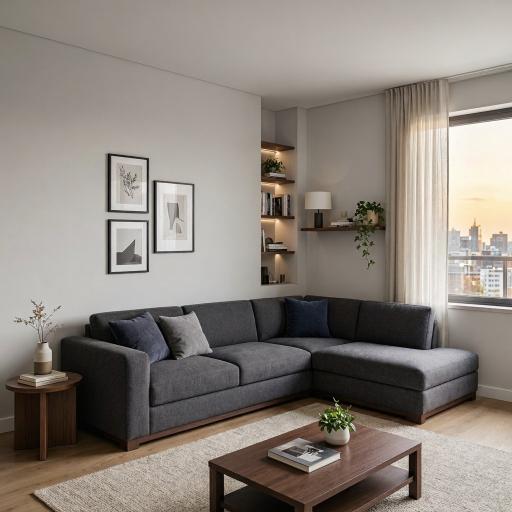
The apartment-sized sectional is one of the most intelligent and practical sofa solutions available for people who love the comfort and configurability of sectional seating but live in spaces that conventional sectional dimensions would overwhelm entirely. Designed specifically for the proportions of city apartments, studio flats, and compact living rooms, apartment-sized sectionals typically range from two hundred to two hundred and forty centimeters on their longest side, compared to the two hundred and eighty to three hundred and forty centimeters of a standard sectional, while still providing the L-shaped configuration and generous seating capacity that makes the sectional format so popular and functional.
The key advantage of an apartment-sized sectional over a conventional two or three-seater sofa in a compact space is that the L-configuration allows the sofa to occupy a corner of the room efficiently, using space that would otherwise be left empty while providing significantly more seating surface than two separate pieces would in the same area. Position the short arm of the sectional against one wall and the long arm against the adjacent wall to maximize corner efficiency, and choose a configuration without arms on the wall-adjacent sides to minimize the overall footprint while maintaining maximum seating comfort. A leggy frame and a light fabric color will further reduce the visual weight of the sectional in a smaller room.
4. The Loveseat for Studio Apartments
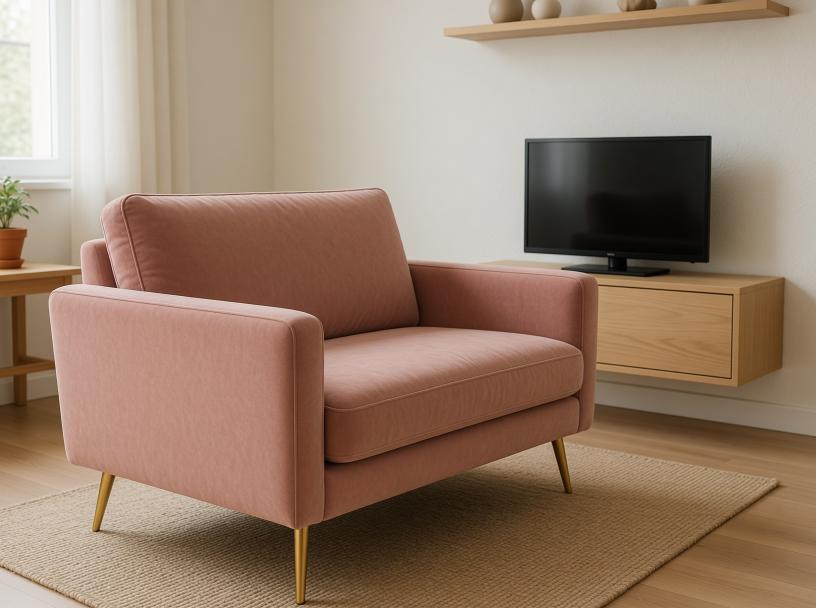
A loveseat is the most intimate and spatially considerate of all sofa formats, and its compact width of typically one hundred to one hundred and thirty-five centimeters makes it the ideal seating solution for studio apartments, home offices that double as occasional guest rooms, and any other space where even a standard two-seater would feel oversized and imposing. The loveseat format has undergone a significant aesthetic rehabilitation in recent years, moving far beyond the dated, floral-upholstered associations of its past into a contemporary design landscape where loveseats in velvet, bouclé, and fine linen with elegant metal or tapered wooden legs are among the most stylish and Pinterest-popular sofa choices available.
The intimate scale of a loveseat forces a particular kind of deliberate coziness in the seating arrangement it creates, positioning two people close enough together for genuine conversation, shared viewing, and physical comfort in a way that a larger sofa does not naturally encourage. This quality makes the loveseat not just a practical compromise for small spaces but a genuinely desirable seating choice for rooms and relationships where intimacy and connection are valued over the capacity to seat an entire social group. Pair a loveseat with a single accent chair in a complementary fabric for a small living room arrangement that provides flexible seating for three without the bulk of a larger sofa.
5. The U-Shaped Sectional for Large Family Rooms
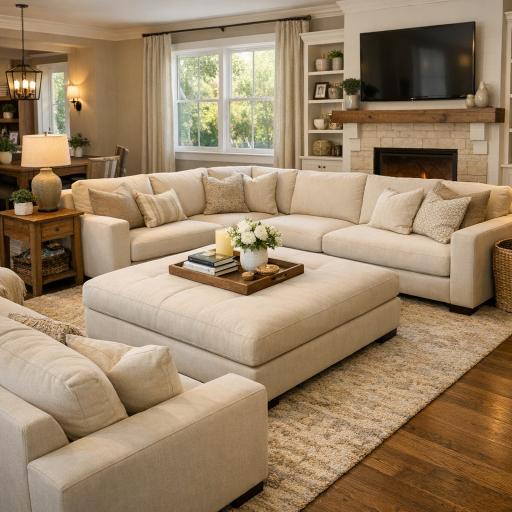
A U-shaped sectional is the most generous, inclusive, and family-oriented of all sofa configurations, and its three-sided arrangement creates a defined, enclosed seating space of extraordinary comfort and social capacity that is perfectly suited to large family rooms, basement entertainment spaces, and any room where the primary function is gathering many people together in maximum comfort for extended periods of relaxed, convivial use. The U-shaped configuration, with its two parallel chaise sections flanking a central sofa back, creates a natural conversation pit effect that draws people inward and encourages the kind of relaxed, face-to-face social interaction that linear sofa arrangements cannot facilitate as naturally.
A U-shaped sectional requires a room of genuine scale to accommodate it without overwhelming the space, and the minimum recommended room size for a standard U-shaped configuration is typically five by five meters, with larger configurations requiring proportionally more floor space. A large square or rectangular ottoman positioned at the center of the U serves simultaneously as a coffee table surface, an additional seating option when extra guests arrive, and a footrest for the sofa users on all three sides, and the combination of U-shaped sectional and central ottoman creates the most complete and self-contained family seating arrangement available in domestic furniture. Choose a performance fabric in a warm neutral for a family room sectional that can withstand the enthusiastic daily use of children, pets, and frequent entertaining.
6. The Chaise Sofa for Relaxed Single Living
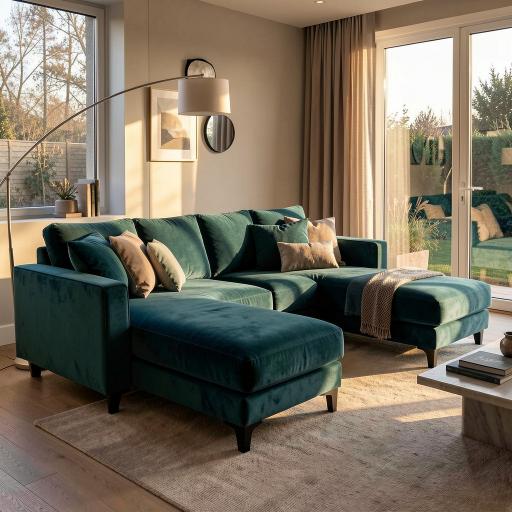
A sofa with an attached chaise longue is one of the most indulgent and lifestyle-forward seating choices available, and for a single-person household or a couple who prioritize relaxed, horizontal lounging over maximum seating capacity, it represents the ideal balance between the scale of a sectional and the spatial efficiency of a standard sofa. The chaise section, extending from one end of the sofa in a longer, armless platform designed for stretching out full-length, provides the ultimate lounging surface for reading, napping, watching films, and the kind of deeply restorative horizontal relaxation that a conventional sofa seat cannot offer with the same physical generosity.
The visual character of a chaise sofa is inherently asymmetric and dynamic, with the extended chaise section creating a directional energy that influences the arrangement of all other furniture in the room and establishes a clear sense of orientation and primary lounging position. This directional quality requires careful thought about room layout when choosing which side of the sofa the chaise should extend from, a decision that should be made in relation to the room’s primary light source, the position of the television or focal point, and the natural traffic flow paths through the space. A left-hand or right-hand chaise configuration can completely change the energy and spatial logic of a room, so visualise both options carefully before ordering.
7. The Modular Sofa for Flexible Living
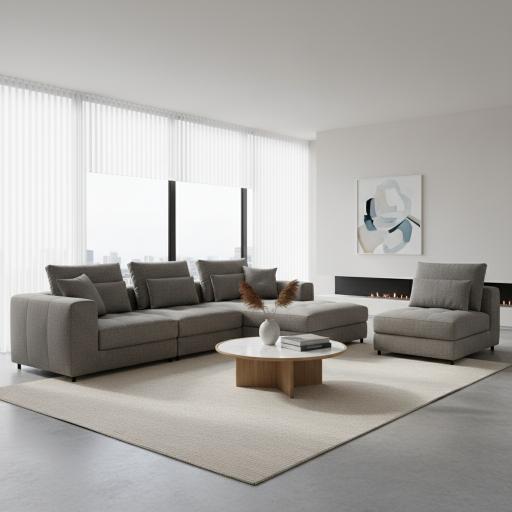
A modular sofa system is the most intelligent and adaptable seating solution available for contemporary living situations where flexibility, change, and the ability to reconfigure a space for different needs and occasions is valued as highly as comfort and aesthetic quality. Unlike a conventional sectional that is fixed in its configuration once purchased and delivered, a modular sofa is composed of individual standardized sections, seat units, back units, corner pieces, and chaise sections, that can be combined, separated, and reconfigured in multiple arrangements to suit different room layouts, different social occasions, and different life stages as your living situation evolves over time.
The practical intelligence of a modular sofa system becomes particularly apparent during life transitions that involve moving home, as individual modules can be reconfigured to suit the proportions and layout of each new space rather than requiring the purchase of entirely new seating for each move. A configuration that works as a generous L-shaped sectional in a large apartment can be separated and rearranged as a straight sofa plus two individual seating units in a smaller home, or reassembled as a U-shaped configuration in a basement family room, all using the same original modules and providing continuous, adaptable service across entirely different living environments. This lifetime flexibility represents extraordinary value and makes modular sofas the most sustainable seating investment available.
8. The Curved Sofa as a Statement Piece
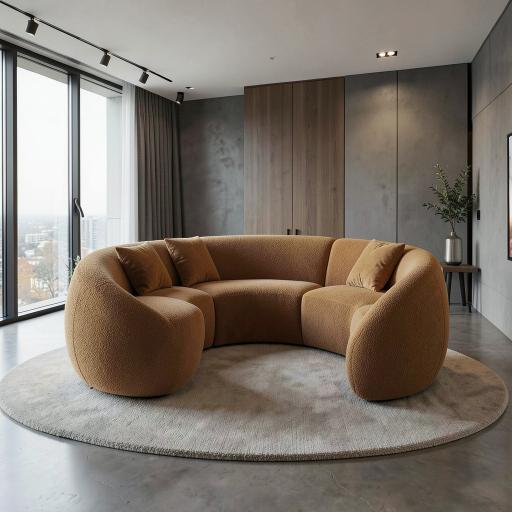
A curved sofa is one of the most dramatically sculptural and visually distinctive seating choices available in contemporary furniture design, and its flowing, arc-shaped form has become one of the most saved and discussed sofa styles on Pinterest interior boards for the past several years as the organic modern aesthetic has gained dominance across home decorating culture. Unlike the rectilinear forms of conventional sofas and sectionals, a curved sofa has a softness and movement that makes it feel simultaneously architectural and organic, functioning as a genuine piece of furniture sculpture rather than simply a seating platform, and commanding a room’s visual attention with an authority that no straight-backed alternative can match.
The curved sofa’s natural form suggests placement at the center of a room, floating free from walls in the manner of a sculpture in a gallery, rather than pushed against a perimeter wall in the conventional sofa position, and this centrist placement creates a genuinely different spatial experience of the living room that encourages a more intimate, inward-focused seating arrangement. Position a curved sofa with its back to the room’s entry point, curving inward to embrace the primary focal point such as a fireplace or large window, with a round coffee table at its center for a composition of concentric curves that is among the most beautiful and resolved sofa arrangements possible in a modern interior.
9. The Sleeper Sofa for Guest-Ready Small Spaces
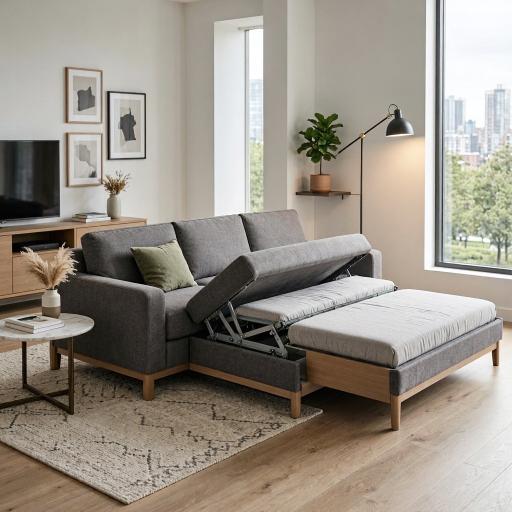
A sleeper sofa is the most pragmatically intelligent sofa choice for anyone who lives in a small space but wants to maintain the ability to host overnight guests without dedicating a separate room permanently to guest sleeping accommodation. The contemporary sleeper sofa has evolved considerably beyond the uncomfortable, mechanically complicated fold-out designs of previous decades, with modern pull-out mattress mechanisms, click-clack conversion systems, and memory foam sleeping surfaces now making the sleeper sofa a genuinely comfortable overnight accommodation option that requires no compromise in the daytime sofa experience that the piece provides for the other three hundred and fifty days of the year when it is not being used as a bed.
The key consideration when choosing a sleeper sofa for a small living room is ensuring that the room has sufficient floor space in front of the sofa to accommodate the fully extended bed configuration without blocking doorways or making the room completely impassable when the bed is deployed. Measure carefully from the front edge of the sofa in its normal position to ensure that the full extension of the mattress, typically an additional ninety to one hundred centimeters beyond the sofa’s front edge, can be accommodated without creating an impossible navigation challenge. A sleeper sofa with a lighter frame, visible legs, and a compact mattress mechanism will occupy less visual space in its sofa configuration and cause less disruption to the room’s normal layout when the bed is in use.
10. The Sectional With Ottoman for Ultimate Comfort
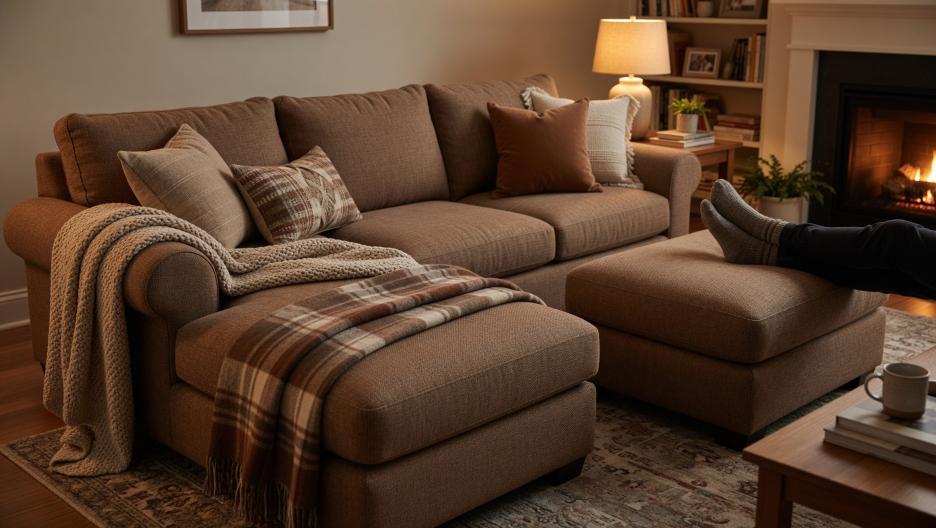
A sectional sofa paired with a large matching ottoman is the ultimate comfort-focused living room seating arrangement, creating a continuous, adaptable seating and lounging surface of extraordinary generosity that serves simultaneously as a sofa, a chaise longue, a coffee table, and additional seating for guests in a single, cohesive furniture composition. The matching ottoman, upholstered in the same fabric as the sectional and designed to coordinate with its proportions and design language, completes the sectional configuration visually while adding the functional flexibility of a surface that can be used for feet, for seating, for a tray of drinks and snacks, or for children’s play in equal measure.
The placement of the ottoman within the sectional arrangement requires thought about both function and visual balance, as an ottoman positioned too centrally within the U of a sectional can restrict movement and feel cramped, while one placed too far from the sofa loses its functional relationship with the seating and begins to feel like a separate piece floating in space. The ideal ottoman placement is close enough to the sofa for feet to reach it comfortably from every seating position while leaving a clear path for entry and exit from the seating arrangement on at least two sides. A tray placed on the ottoman surface when it is being used as a coffee table substitute protects the upholstery and provides a stable, level surface for drinks and objects.
11. Two Small Sofas Facing Each Other
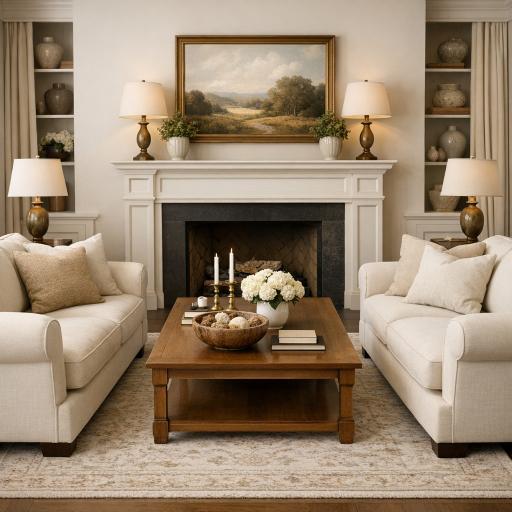
Arranging two small sofas facing each other across a central coffee table is one of the most classically elegant and socially considered living room configurations available, creating a formal conversation arrangement of perfect symmetry and balance that encourages face-to-face interaction and gives a living room a sense of deliberate, considered design that a single sofa pushed against one wall can rarely achieve. This twin sofa arrangement has deep roots in the traditional drawing room and formal sitting room layouts of European interior design history, and its contemporary revival in clean-lined, neutral-toned interiors gives it a freshness and relevance that transcends its historical origins.
The twin sofa arrangement works best in rooms of sufficient length to accommodate both sofas, the coffee table between them, and adequate circulation space at either end without the sofas appearing crammed together or the arrangement feeling claustrophobic and tunnel-like. A minimum distance of ninety centimeters between the front edges of the facing sofas, with the coffee table occupying that central space, creates a comfortable and visually balanced arrangement. Choose matching sofas in the same upholstery for maximum symmetry and visual calm, or select two sofas in complementary but contrasting fabrics, one in a textured weave and one in a solid color, for a more relaxed, eclectic take on the twin sofa concept.
12. A Small Sofa Plus Accent Chairs
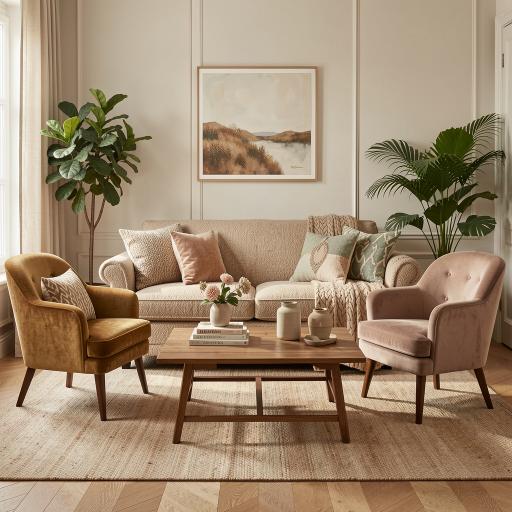
Combining a small sofa with two accent chairs is one of the most flexible, design-forward, and socially inclusive living room seating arrangements available, providing seating for four to five people in a configuration that feels far more dynamic, interesting, and designed than a single large sofa or sectional while occupying a comparable or smaller overall floor footprint. The accent chair approach allows for the introduction of different upholstery fabrics, different silhouettes, and different material qualities into a single seating arrangement that expresses the kind of considered eclecticism that is the hallmark of genuinely designed interiors, and the resulting living room feels assembled with taste and personality rather than purchased as a matching set.
The most successful small sofa and accent chair arrangements are those where the individual pieces share sufficient common ground in scale, proportion, and palette to cohere as a composition while remaining distinct enough in their specific character to create visual interest and variety. A linen sofa paired with a velvet accent chair and a rattan armchair creates a material variety that reads as rich and layered rather than randomly assembled, provided that all three pieces share a consistent color relationship and a similar sense of scale. Arrange the three pieces around a central coffee table or rug with equal attention to the space between and around the pieces, as the quality of the negative space is as important as the quality of the furniture itself.
13. The Sectional Sofa as a Room Divider
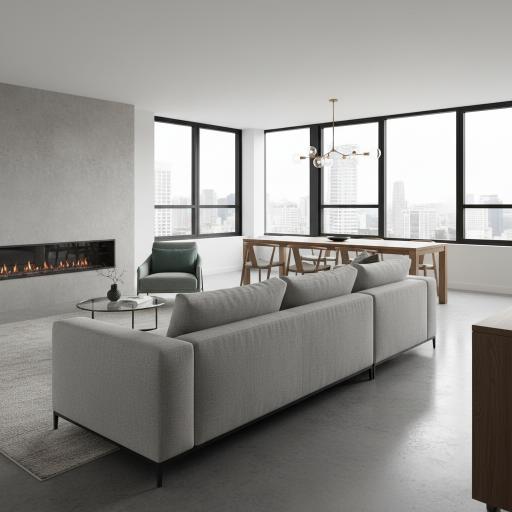
Using a sectional sofa as a room divider in an open-plan space is one of the most practical and architecturally intelligent furniture strategies available for creating spatial definition and functional zone separation without the commitment and visual weight of physical partition walls. The back of a sectional sofa, when positioned with its rear face toward the dining or kitchen area and its seating face toward the living zone, creates a clear visual and psychological boundary between two functional areas that allows each to feel distinct and purposeful while maintaining the openness and light flow of the undivided floor plan.
The success of a sectional as a room divider depends significantly on the height and visual permeability of its back, as a very high-backed sectional will create a more solid and emphatic division than a lower-backed model that allows sightlines to flow more freely across the boundary. A console table or narrow shelf unit placed directly against the back of the sectional, accessible from the dining side, provides a practical surface for plants, lamps, and decorative objects that gives the back face of the sofa a finished, intentional quality rather than leaving the raw back panel exposed and unaddressed as an undecorated surface visible from the dining area.
14. The Small Sofa for Bedroom Seating
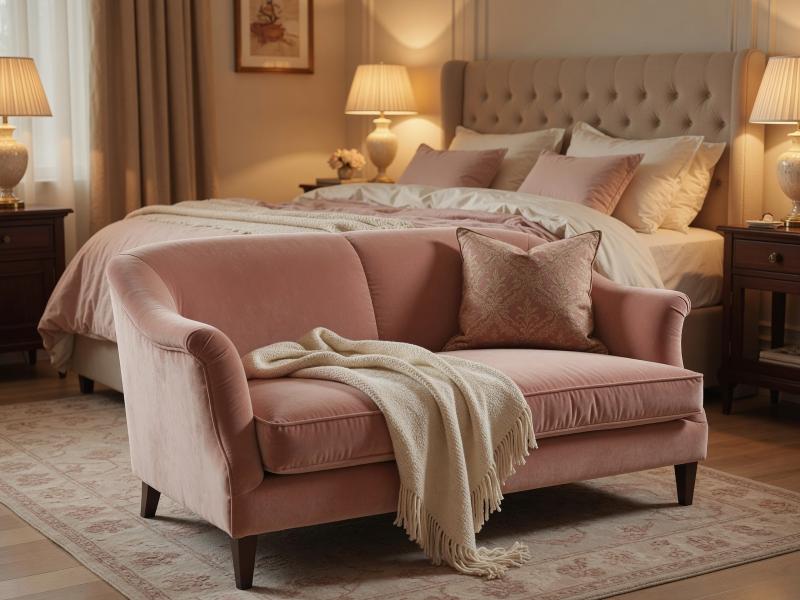
A small sofa positioned at the foot of the bed or in a corner of the bedroom is one of the most luxurious and lifestyle-enhancing furniture additions you can make to a bedroom space, transforming it from a purely functional sleeping room into a genuinely multi-purpose personal retreat that serves for reading, dressing, intimate conversation, and the kind of quiet solitary restoration that the bedroom, above all other rooms in the home, is ideally suited to provide. The bedroom sofa is a feature of hotel rooms and designer bedrooms worldwide for the simple reason that a comfortable seat within the private sanctuary of the bedroom elevates the quality of daily life in a way that is immediately and consistently felt.
The scale of sofa appropriate for bedroom placement is typically smaller than what you would choose for a living room, as the bedroom sofa is competing for floor space with the bed, wardrobes, and bedside furniture that define the room’s primary function. A loveseat, a compact two-seater in the one hundred and forty to one hundred and sixty centimeter range, or a chaise longue depending on the available space and your preferred use pattern, all work beautifully in a bedroom context without dominating the room or reducing the necessary floor space for dressing and movement. Choose an upholstery that coordinates with the bedroom’s overall palette and textile scheme for a unified, serene result.
15. Mixing a Small Sofa With a Large Sectional
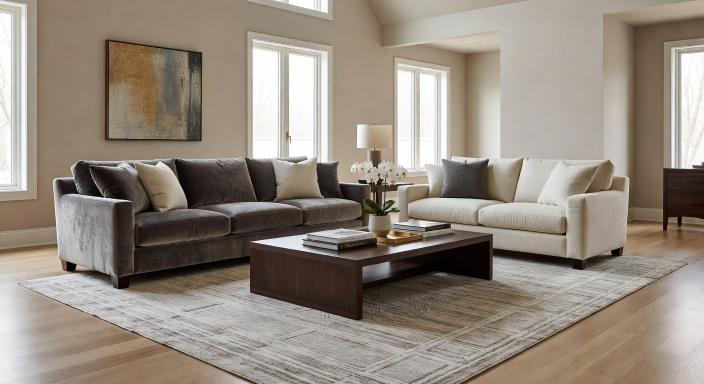
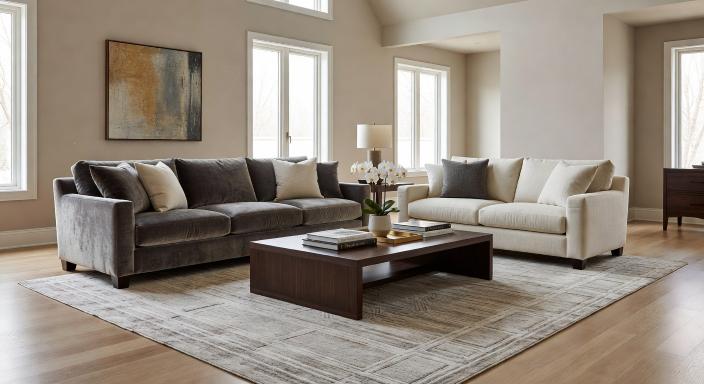
Combining a large sectional with a smaller sofa on the opposite side of a generous living room creates the most capacious and socially inclusive seating arrangement possible in a domestic setting, providing enough seating for a large group of people while maintaining the spatial definition and visual balance that a single sectional or multiple smaller sofas alone cannot achieve in a large room that requires substantial furniture to feel proportionally appropriate and genuinely filled rather than sparsely and inadequately furnished. This combined arrangement is the solution of choice for large living rooms, basement entertainment spaces, and open-plan areas where the primary function is frequent entertaining and family gathering.
The visual success of a mixed sectional and small sofa arrangement depends on establishing a clear relationship between the two pieces through shared elements of color, material, or design language that allows them to read as a considered pairing rather than two unrelated pieces that happen to share a room. The most resolved arrangements use the same or complementary upholstery fabric across both pieces, maintaining a consistent material palette that unifies the seating group visually while the difference in scale and configuration between the sectional and the smaller sofa creates the visual variety and spatial dynamism that makes a large living room feel genuinely interesting and alive rather than simply large and adequately furnished.